FF Humanoid Robots
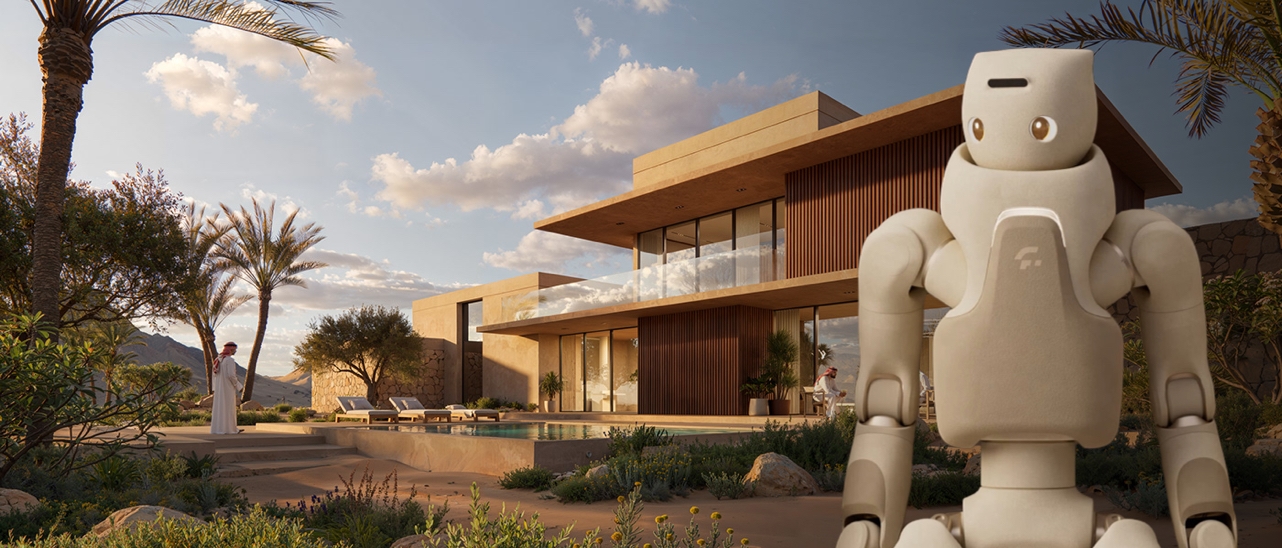
FF Humanoid Robots are the humanoid arm of Faraday Future's EAI Robot World — a complete range from the California-based, NASDAQ-listed manufacturer spanning three series and five machines: the Nova entry-level miniature humanoid for education and companionship, the Master Mini compact humanoid for education and sports competition, the Master and its flagship Master Ultra trim at 1.31 metres with 30 degrees of freedom, 3D LiDAR perception and VR teleoperation, and the full-size All-New Futurist at about 173 centimetres with 31 body degrees of freedom, a genuine 11-mile-per-hour run, six-hour dual-battery endurance and native NVIDIA SONIC whole-body control, joined by the Jetson Thor-powered, self-charging Futurist Ultra — all sharing one Embodied AI brain, a downloadable SKILLS marketplace and an open developer platform, with U.S.-certified products already delivering in volume.
FF Humanoid Robots
For years the American humanoid market sold single acts: one company, one robot, one price point, take it or wait for the sequel. FF Humanoid Robots turn up as a catalogue. Faraday Future — the Los Angeles EV maker reborn as a physical AI company — builds its humanoid range the way an automaker builds a model line: an entry point, a mid-range, a flagship, and performance trims above each, every tier sharing one platform underneath. At the accessible end stands the Nova, the first entry-level miniature humanoid in the U.S. built for education and companionship, beside the Master Mini, the first American compact humanoid designed for both classroom learning and sports competition. The mid-range belongs to the Master series — 1.31 metres, 30 degrees of freedom — crowned by the Master Ultra trim carrying 3D LiDAR, RGB-D vision, 157 TOPS of Orin NX compute and full VR remote manipulation. And at the top walks — in fact, runs — the All-New Futurist: full adult scale at about 173 centimetres, 31 body degrees of freedom, 320 newton-metres of knee torque, a true 11-mile-per-hour sprint and six hours of dual-battery endurance, with the Jetson Thor-powered, self-charging Futurist Ultra extending the platform into autonomous professional work. What binds the ladder is the point of it: one shared EAI brain trained by the whole fleet's data, one SKILLS marketplace whose downloadable abilities run across the family, and one open developer platform — so skills learned at any rung climb the rest.
FF humanoid robots are available for purchase internationally through this page, with delivery, customs clearance and after-sales support arranged for buyers across the Americas, Europe, the Middle East, Asia-Pacific and worldwide.
Background
Why a range beats a robot
Humanoid adoption stalls on a mismatch: institutions want to start small and grow, but single-model vendors force an all-or-nothing bet. FF's answer is automotive discipline applied to robots — a laddered line in which each tier is a genuine product and a genuine on-ramp. A school begins with Nova units and a Master Mini team; the robotics department adds a Master Ultra for research; the university lab or commercial pilot graduates to a Futurist — and nothing learned is left behind, because the Device-Data-Brain architecture makes every machine a client of the same intelligence, and SKILLS purchased or developed once deploy across compatible bodies. The strategy showed its pace in 2026: the range went from Las Vegas debut in February to complete family — with U.S. regulatory certification on first products — by the Automate show in June, and deliveries in the hundreds, against a raised 1,500-unit annual target, before summer ended.
An American address for the humanoid ladder
The range's second argument is its passport. FF is a NASDAQ-listed, California-headquartered manufacturer selling U.S.-certified humanoids through American channels — with real deliveries on record, from education and community-service deployments in Texas to a distribution partnership with a major robotics retailer, plus an education ecosystem (foundation models, developer tools from no-code to SDK, labs and camp programmes) built around the line. For North American schools, agencies and enterprises whose procurement rules, support expectations and compliance reviews complicate imported alternatives, a domestic ladder that runs from a child-safe entry humanoid to a full-size professional machine is not just convenient — it is, at present, unique.
The FF Humanoid Range
| Series | Machine | Scale and character | Built for |
|---|---|---|---|
| Nova | FF Nova | entry-level miniature humanoid — first of its kind in the U.S. | education, companionship, first robotics steps |
| Master | FF Master Mini | compact humanoid for learning and competition — a U.S. first in its dual role | education, sports and performance teams |
| Master | FF Master | 1.31 m / 39 kg compact platform, 30 DOF, 120 N·m peak torque, 1.8 m/s | classrooms, labs, developers, venues |
| Master | FF Master Ultra | Master with full perception (3D LiDAR, RGB-D, 6-axis IMU), Orin NX 157 TOPS, 4G/5G, VR teleoperation, complete SDK/no-code stack | research, advanced education, skill development |
| Futurist | FF All-New Futurist | full-size: ~173 cm / ~55 kg, 31 body DOF, 320 N·m knee torque, ~11 mph run, ~6 h dual-battery endurance, native NVIDIA SONIC control | academic research, commercial and real-world deployment |
| Futurist | FF Futurist Ultra | Futurist with NVIDIA Jetson Thor compute and autonomous charging | complex, long-duration, high-intensity professional missions |
Shared across the range: FF's EAI brain and Device-Data-Brain data loop, the SKILLS downloadable capability marketplace, the open developer platform, and access to RoboShare rental deployment. Per-model specifications are confirmed against current datasheets at quotation.
How do you choose the right FF humanoid?
Start from who touches the robot. If the answer is children, families or first-time learners, the Nova is the door: miniature, approachable, companionship-capable, and still a real citizen of the FF ecosystem. If the answer is a school team with a competitive streak, the Master Mini's education-plus-sports brief fits — humanoid fundamentals with a scoreboard attached. If the robot must carry a curriculum or a research agenda, the Master series is the workhorse, and the Ultra trim is the honest buy for any programme that will eventually want perception, teleoperation or SDK depth — retrofitting ambition costs more than specifying it. And if the mission involves the adult world — commercial floors, professional tasks, full-scale research — the Futurist is the range's argument in its strongest form, with the Ultra taking over where missions run long, complex and unattended. The ladder's economics reward starting anywhere: skills, tooling and staff experience transfer upward with every step.
Who are FF humanoid robots for?
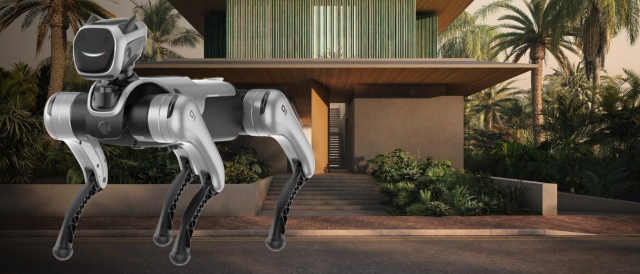
For education systems above all — FF has built the range explicitly around a school-to-university ladder, backed by its Three-in-One education ecosystem, teaching foundation models and developer tools that scale from block programming to full APIs; for research institutions, which get everything from an affordable perception testbed (Master Ultra) to a running, SONIC-native full-size platform (Futurist); for commercial operators, venues and brands staging humanoid engagement at whichever scale the floor demands; for developers and integrators building SKILLS once and selling across an installed base growing by the hundreds each quarter; for community organisations and public programmes, following deployments like the Texas education-and-service rollout; and for buyers who simply require an American-listed, U.S.-certified supplier behind a humanoid fleet. Quadruped and manipulator needs are served by the same family tree — FF's Aegis and Navi dogs and Faber manipulators share the ecosystem.
What are FF humanoid robots used for?
- Education at every level: from Nova first encounters to Master-based curricula and Futurist university research.
- Robotics competition and performance: Master Mini and Master teams in sports, challenges and choreographed shows.
- Academic research: perception, locomotion, manipulation and teleoperated data collection across the range.
- Commercial engagement: venue hosting, brand activations and interactive service from compact to full scale.
- Skill and application development: building for the SKILLS marketplace on Ultra-trim hardware.
- Professional task deployment: real-world work programmes on the Futurist and self-charging Futurist Ultra.
Pricing and Availability
FF humanoid robots are available for purchase and international delivery through this page across the Nova, Master and Futurist series — from a single classroom robot to laddered institutional fleets mixing tiers, with rental-based deployment through the RoboShare model available to explore alongside purchase. Because the range spans entry-level to flagship machines with software bundles, SKILLS packages and trim options at every tier, price and cost are confirmed by individual quotation per model and programme; delivery, customs clearance and after-sales support are arranged worldwide. Purchase enquiries, datasheets and availability details for FF humanoid robots are available on this page.
Frequently Asked Questions
What humanoid robots does Faraday Future make?
Three series covering five machines and their trims: the entry-level Nova miniature humanoid, the Master line — Master Mini, Master and the flagship Master Ultra — and the full-size Futurist with its Jetson Thor-powered Futurist Ultra variant, together forming the humanoid arm of FF's six-series EAI Robot World.
Which FF humanoid is best for schools?
It depends on the classroom: Nova for young learners and first encounters, Master Mini for education-plus-competition programmes, and the Master or Master Ultra where the curriculum extends into programming ladders, perception and research — with FF's education ecosystem spanning all of them.
What makes the Futurist the flagship?
Full adult scale and genuine athletics: about 173 centimetres and 55 kilograms, 31 body degrees of freedom, 320 newton-metres of peak knee torque, a true run at roughly 11 miles per hour, six hours of dual-battery endurance and native NVIDIA SONIC whole-body control — a cited U.S. first — with the Ultra adding Thor compute and autonomous charging.
Do the robots share software?
Yes — that is the range's core design: one EAI brain improved by the whole fleet's operating data, one SKILLS marketplace of downloadable capabilities, and one open developer platform, so investment at any tier carries across the family.
Are FF humanoids actually shipping?
Yes — first products launched with U.S. regulatory certification, deliveries began in the first quarter of 2026 with positive product-level gross margins, real customers including Texas education and community programmes are deployed, and cumulative shipments reached the hundreds by late summer against a raised 1,500-unit target.
Can FF humanoids be rented rather than bought?
Through RoboShare — the rental and sharing platform in FF's ecosystem — organisations can deploy humanoids without outright purchase, a useful route for pilots, events and seasonal programmes before committing to a fleet.
Where can I buy FF humanoid robots and what do they cost?
FF humanoid robots are available through this page, with delivery, customs clearance and after-sales support arranged for buyers worldwide. Because cost varies by series, trim, software bundle and quantity, buyers should request an individual quotation. All purchasing details are available on this page.
Summary
FF Humanoid Robots bring something the category has lacked since it began: a shelf instead of a pedestal. Five machines and their trims run a continuous ladder from a child's first robot to a full-size professional that sprints at 11 miles per hour and works a six-hour shift — every rung sharing one brain, one skills store and one developer platform, from a listed California manufacturer whose humanoids are certified, delivered and multiplying by the quarter. Schools climb it, labs build on it, venues perform with it, and nothing invested at any step is lost on the next. America's first true humanoid range is open for orders at every height — and this page is the starting point.