Ti5 Robotics 50-70 Lightweight Joint Module
In stock
- MEREK:
- TI5 ROBOTICS
- MODEL:
- 50-70
- ORIGIN:
- Tiongkok
- Warranty:
- 12 MONTHS
- AVAILABILITY:
- SUBJECT TO AVAILABILITY
- SKU:
- Ti5-Robotics-Joint-Module-50-70
Ti5 Robotics 50-70 Lightweight Joint Module
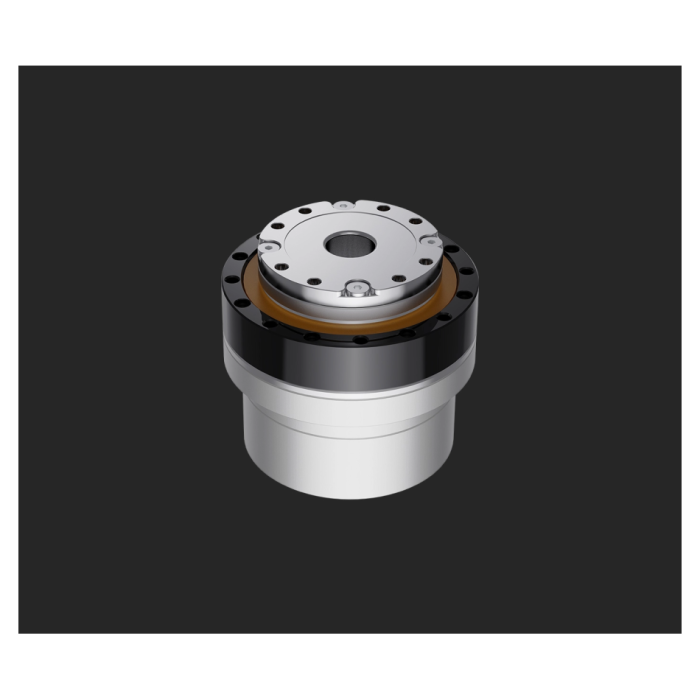
Ti5 Robotics 50-70 Lightweight Joint Module is a compact, integrated rotary actuator family developed for humanoid robots, collaborative manipulators, and other articulated machines. Each unit combines a motor, precision gear stage, encoder feedback, and drive electronics in a single hollow-shaft package, so a robot builder can treat the joint as one mechatronic building block rather than a collection of separate drive components. The 50-70 family is documented in four joint versions that share a common electrical platform while differing in mechanical length, mass, rotor inertia, and communication options, and every documented version is offered in three gear ratios.
Background
A modular actuator family, not a single part number
The manufacturer lists four versions of the 50-70 module: CRA-RI50-70-PRO-2-XXX, CRA-RI50-70-PRO-2-XXX-B, CRA-RI50-70-PRO-2-XXX-2E-EC, and CRA-RI50-70-PRO-2-XXX-B-2E-EC. Three of these publish complete parameter tables. The fourth, CRA-RI50-70-PRO-2-XXX-B-2E-EC, appears in the source documentation with a drawing and a parameter-table heading but without numeric values, so its figures should be confirmed directly with the manufacturer before a design is committed to it. Each documented version can be ordered in a gear ratio of 51, 81, or 101, which lets an integrator trade output torque against output speed within the same housing family. Because the ratio changes the torque and speed envelope substantially, the gear-ratio selection is as important as the version selection.
Design philosophy: modular, integrated, lightweight
The vendor positions the 50-70 series around three ideas. Modularity allows flexible assembly and simpler maintenance, since a joint can be swapped as a unit. Integration places the gearing, sensing, and drive electronics inside one envelope, which reduces external wiring and saves space in dense limb structures. The lightweight structure, with documented masses between roughly 0.66 kg and 0.78 kg depending on version, reduces the moving mass that downstream joints must carry, which matters in multi-joint kinematic chains such as humanoid arms and legs. It is worth stating plainly that although the vendor catalog groups this product near a Humanoid Robot Actuator category, the 50-70 is a joint actuator component intended for integration into robots; it is not itself a complete robot, arm, or hand.
Technical Specifications
The following tables preserve the published configuration distinctions. Blank, malformed, or ambiguous source values are not confirmation of a capability; confirm the selected configuration during quotation.
CRA-RI50-70-PRO-2-XXX
| Gear Ratio | Peak Torque (N.m) | Max Allowable Torque At Average Load (N.m) | Rated Torque @ 2000RPM (N.m) | Peak Speed (RPM) | Rated Speed (With 1/2 Rated Torque) (RPM) | Gear Backlash (arcsec) |
| 51 | 23 | 8.6 | 6.6 | 97 | 75 | 20 |
| 81 | 29 | 13.5 | 9.6 | 61 | 46 | 20 |
| 101 | 34 | 13.5 | 9.6 | 49 | 37 | 10 |
| Rated Power(W) | Supply Voltage(V) | Max Continuous Current(A) | Rated Current(A) | Torque Constant (N.m/A) | Encoder Resolution (bit) | Communication Bus |
| 150 | 24-48 | 5 | 3.6 | 0.089 | 16 | CAN |
| Hollow Shaft(mm) | Length(mm) | Mass(kg) | Inertia(g * c㎡) |
| 12 | 63±0.5 | 0.66 | 158.8 |
CRA-RI50-70-PRO-2-XXX-B
| Gear Ratio | Peak Torque (N.m) | Max Allowable Torque At Average Load (N.m) | Rated Torque @ 2000RPM (N.m) | Peak Speed (RPM) | Rated Speed (With 1/2 Rated Torque) (RPM) | Gear Backlash (arcsec) |
| 51 | 23 | 8.6 | 6.6 | 97 | 75 | 20 |
| 81 | 29 | 13.5 | 9.6 | 61 | 46 | 20 |
| 101 | 34 | 13.5 | 9.6 | 49 | 37 | 10 |
| Rated Power(W) | Supply Voltage(V) | Max Continuous Current(A) | Rated Current(A) | Torque Constant (N.m/A) | Encoder Resolution (bit) | Communication Bus |
| 150 | 24-48 | 5 | 3.6 | 0.089 | 16 | CAN |
| Hollow Shaft(mm) | Length(mm) | Mass(kg) | Inertia(g * c㎡) |
| 12 | 81.5±0.5 | 0.78 | 228.8 |
CRA-RI50-70-PRO-2-XXX-2E-EC
| Gear Ratio | Peak Torque (N.m) | Max Allowable Torque At Average Load (N.m) | Rated Torque @ 2000RPM (N.m) | Peak Speed (RPM) | Rated Speed (With 1/2 Rated Torque) (RPM) | Gear Backlash (arcsec) |
| 51 | 23 | 8.6 | 6.6 | 97 | 75 | 20 |
| 81 | 29 | 13.5 | 9.6 | 61 | 46 | 20 |
| 101 | 34 | 13.5 | 9.6 | 49 | 37 | 10 |
| Rated Power(W) | Supply Voltage(V) | Max Continuous Current(A) | Rated Current(A) | Torque Constant (N.m/A) | Encoder Resolution (bit) | Communication Bus |
| 150 | 24-48 | 5 | 3.6 | 0.089 | 16/18 | CAN/EtherCAT |
| Hollow Shaft(mm) | Length(mm) | Mass(kg) | Inertia(g * c㎡) |
| 13 | 66.5±0.5 | 0.68 | 170.47 |
How do the four versions of the 50-70 joint module differ?
The base CRA-RI50-70-PRO-2-XXX is the shortest and lightest documented unit at 63 mm and 0.66 kg, communicating over CAN with a 16-bit encoder. The B version extends the housing to 81.5 mm and 0.78 kg with higher rotor inertia, which typically reflects additional internal content along the axis while keeping the same 12 mm hollow shaft. The 2E-EC version introduces a dual-encoder arrangement with 16/18-bit resolution and adds EtherCAT alongside CAN, with a slightly larger 13 mm hollow shaft at 66.5 mm length. The B-2E-EC version combines the B and 2E-EC designations, but because its parameter table is not populated in the source material, its exact dimensions and ratings should be requested from the manufacturer rather than assumed from the other variants.
Who is the Ti5 Robotics 50-70 Lightweight Joint Module for?
This module is aimed at robotics engineers, research laboratories, and product-development teams building articulated machines where joint mass and packaging are critical. Teams designing humanoid platforms, lightweight collaborative arms, or custom multi-axis mechanisms can use the family to standardize on one joint architecture across several axes, selecting gear ratio and version per joint. It also suits universities and training programs that need a documented, bus-controlled actuator for coursework and prototyping, as well as integrators who prefer to buy qualified joint units instead of engineering motor-gearbox-encoder stacks in-house.
What is the Ti5 Robotics 50-70 Lightweight Joint Module used for?
- Rotary joints in humanoid robot limbs, where low mass and a hollow shaft for cable routing are valuable.
- Axes of collaborative robot arms and custom lightweight manipulators.
- Scientific research and education platforms in robotics and mechatronics laboratories, an application area named by the manufacturer.
- Medical and rehabilitation robotics development, listed by the manufacturer as a target application domain.
- Commercial-scenario service robots and automation devices that need compact integrated actuation.
- Industrial production mechanisms and prototypes where a bus-controlled, integrated joint simplifies machine design.
Pricing and Availability
Pricing for the 50-70 family depends on the version, gear ratio, communication option, and order quantity, so it is quoted per configuration rather than published as a flat figure. Availability and lead time likewise vary with configuration. To obtain current pricing, use the request-a-quote option on this listing and specify the version, ratio, and quantity you need; a specialist can also advise on substitutions within the family.
Frequently Asked Questions
What gear ratios are available for the 50-70 module?
Three ratios are documented: 51, 81, and 101. Higher ratios deliver more torque at lower speed; for example, the 101 ratio reaches 34 N·m peak torque at a 49 RPM peak speed, while the 51 ratio offers 23 N·m at up to 97 RPM.
Which versions support EtherCAT?
The 2E-EC version is documented with CAN/EtherCAT communication and 16/18-bit encoder resolution. The base and B versions are documented with CAN only. The B-2E-EC designation implies EtherCAT support, but its parameters are not published in the available source.
Does the module have a hollow shaft?
Yes. The base and B versions document a 12 mm hollow shaft, and the 2E-EC version documents 13 mm, allowing cables or lines to pass through the joint axis.
What power supply does it require?
The documented versions run on 24–48 V DC, with a 150 W rated power, 3.6 A rated current, and 5 A maximum continuous current.
Is this a complete robot or robot arm?
No. It is a self-contained joint actuator module intended to be designed into robots, arms, and other mechanisms by an integrator.
Are full specifications available for the B-2E-EC version?
Not in the source documentation reviewed for this listing. Its parameter table is unpopulated, so dimensions and ratings for that version should be confirmed with the manufacturer before design-in.
Where can I buy the Ti5 Robotics 50-70 Lightweight Joint Module and what does it cost?
You can purchase it through this listing. Because cost depends on the version, gear ratio, and quantity, submit a quote request with your configuration to receive current pricing and lead-time information.
Summary
The Ti5 Robotics 50-70 Lightweight Joint Module is a documented four-version family of integrated hollow-shaft joint actuators with three selectable gear ratios, a shared 24–48 V, 150 W electrical platform, and CAN or CAN/EtherCAT control depending on version. For engineers comparing versions, confirming the undocumented B-2E-EC configuration, or requesting a configured quotation, this page is the starting point.