상업용
최신 로봇 솔루션에 대한 기술, 응용 프로그램, 이점 및 선택 기준에 대한 중립적이고 사실 기반 요약을 통해 상업용을 살펴보세요.
소개 및 개요
간략한 개요: 최신 로봇 솔루션의 기술, 응용 프로그램, 이점 및 선택 기준에 대한 중립적이고 사실 기반 요약을 통해 상업용을 살펴보세요.
상업용은 산업, 서비스, 연구 및 공공 운영 분야의 실제 작업을 해결하기 위해 자동화, 인공 지능, 센서 및 강력한 기계 시스템이 결합되어 빠르게 성장하는 로봇 시장의 일부입니다. 현대 로봇 카테고리는 단일 기계 이상으로 이해되어야 합니다. 여기에는 하드웨어, 소프트웨어, 안전 기능, 통합, 교육, 유지 관리 및 기술이 가치를 창출하는 비즈니스 컨텍스트가 포함됩니다. 이 페이지는 의사 결정자, 엔지니어, 구매자, 교육자 및 연구원을 위한 포괄적이고 권위 있으며 검색에 최적화된 상업용 개요를 제공합니다.
상업용에 대한 관심은 더 높은 생산성, 더 나은 데이터 품질, 더 일관된 프로세스 및 사람에게 무겁고 반복적이며 위험하거나 시간이 많이 걸릴 수 있는 작업의 안전한 처리에 대한 요구로 인해 발생합니다. 조직이 상업용, 판매용 상업용, 상업용 가격 또는 상업용 비용을 조사할 때 구매에 대해서만 결정을 내리는 경우는 거의 없습니다. 또한 사양, 구현, 운영자 교육, 서비스, 예비 부품, 소프트웨어 업데이트, 사이버 보안 및 장기 지원 등 전체 수명 주기가 포함됩니다.
디자인과 특징
상업용의 디자인은 작업, 환경, 기대되는 자율성에 따라 달라집니다. 일부 시스템은 고정되어 정밀성에 최적화되어 있는 반면, 다른 시스템은 이동식이며 복잡한 공간 내 탐색용으로 제작되었습니다. 신뢰할 수 있는 로봇 솔루션은 일반적으로 기계적 안정성, 신뢰할 수 있는 액추에이터, 센서 융합, 직관적인 사용자 인터페이스 및 문서화된 안전 프로토콜을 결합합니다. 로봇은 운영자, 기술자, 고객 또는 기타 자동화 장비 근처에서 작동하는 경우가 많기 때문에 서비스 접근성, 모듈성 및 인체 공학도 중요합니다.
일반적인 기능에는 프로그래밍 가능한 워크플로우, 원격 모니터링, 모듈식 액세서리, 실시간 진단, 충돌 감지, 카메라, LiDAR, 힘 센서, 그리퍼, 배터리 관리 및 기존 IT 또는 자동화 시스템과의 통합이 포함될 수 있습니다. 모바일 카테고리의 경우 매핑, 경로 계획, 장애물 회피 및 차량 관리가 중요한 경우가 많습니다. 사람 가까이에서 작동하는 로봇의 경우 속도 제한, 비상 정지, 중복성 및 명확한 상태 통신이 필수적인 설계 요구 사항입니다.
기술 및 사양
상업용의 기본 기술은 일반적으로 기계, 전자 및 소프트웨어의 조합입니다. 로봇은 힘, 속도 및 정밀도에 대한 요구 사항에 따라 전기 모터, 하모닉 드라이브, 선형 액추에이터, 유압 구성 요소 또는 특수 조인트를 사용할 수 있습니다. 제어는 센서 데이터를 처리하고 이를 이동, 탐색 또는 결정으로 변환하는 산업용 컨트롤러, 에지 컴퓨터 또는 내장형 시스템에 의해 처리됩니다.
사양은 항상 의도된 애플리케이션에 대해 평가되어야 합니다. 관련 매개변수에는 페이로드, 도달 거리, 런타임, 충전 시간, 속도, 위치 정확도, IP 등급, 작동 온도, 통신 프로토콜, 안전 인증, 소프트웨어 API 및 액세서리 호환성이 포함될 수 있습니다. 저렴한 구매 가격은 안정적인 운영, 문서화 및 서비스보다 덜 중요할 수 있지만, 고급 모델은 해당 기능이 워크플로에서 실제로 사용될 때만 의미가 있습니다.
애플리케이션 및 사용 사례
상업용은 제조, 물류, 검사, 교육, 연구, 의료, 서비스, 보안 및 현장 운영 전반에 걸쳐 사용할 수 있습니다. 산업 환경에서 로봇은 처리량을 향상시키고 오류를 줄이며 보다 예측 가능한 프로세스를 생성하는 데 도움을 줍니다. 서비스 또는 고객 대면 환경에서는 가용성, 정보 전달 및 일상적인 작업 처리를 향상시킬 수 있습니다. 연구 개발에서 로봇 플랫폼을 사용하면 탐색, 조작, 인간-로봇 상호 작용 및 AI 기반 의사 결정을 테스트할 수 있습니다.
조직은 기술을 선택하기 전에 문제를 정의해야 합니다. 좋은 요구 사항 사양은 작업, 환경, 페이로드, 안전 요구 사항, 통합 지점, 운영자 기술 수준, 데이터 요구 사항 및 예상 서비스 주기를 설명합니다. 그런 다음 광범위한 마케팅 주장보다는 검증 가능한 특성을 사용하여 상업용을 비교할 수 있습니다. 이를 통해 조달 위험이 줄어들고 솔루션이 표준인지, 맞춤형인지 또는 대규모 자동화 프로젝트의 일부인지 결정하기가 더 쉬워집니다.
장점과 한계
상업용의 주요 이점에는 일반적으로 더 높은 효율성, 향상된 반복성, 더 나은 안전성, 더 강력한 데이터 캡처 및 단조롭거나 위험한 작업에서 사람들을 해방시키는 능력이 포함됩니다. 로봇은 안정적인 프로세스로 작동하고 이벤트를 문서화하며 장기간 수동으로 유지 관리하기 어려운 결과를 제공할 수 있습니다. 따라서 많은 조직에서 로봇공학은 단순한 장비 구매가 아닌 전략적 역량이 됩니다.
한계점은 현실적으로 평가되어야 합니다. 구현에는 계획, 테스트, 교육, 통합이 필요하며 때로는 기존 워크플로에 대한 변경도 필요합니다. 예측할 수 없는 변수가 많은 환경에는 추가 센서, 소프트웨어 적응 또는 사람의 감독이 필요할 수 있습니다. 전체 경제에는 구매뿐만 아니라 유지 관리, 예비 부품, 서비스 계약, 에너지 소비, 사이버 보안 및 내부 역량 구축도 포함됩니다. 그렇기 때문에 상업용 가격과 상업용 비용은 단일 숫자가 아닌 총 소유 비용으로 이해해야 합니다.
아시아에서의 구매, 평가 및 구현
사용자가 buy 상업용 또는 상업용 for sale을 검색할 때 가장 좋은 출발점은 모델, 액세서리 및 관련 솔루션을 동일한 맥락에서 비교할 수 있는 관련 카테고리 페이지입니다. 아시아 시장의 경우 구매자는 언어 지원, 지역 배송, 보증 서비스, 문서화, 규정 준수, 교육 및 현지 운영 조건과의 통합을 고려해야 하는 경우가 많습니다. 정확한 가격은 구성, 수량, 액세서리, 지원 수준, 배송 및 통합 요구 사항에 따라 달라지므로 여기에 구체적인 가격은 표시되지 않습니다.
구조화된 구현에는 일반적으로 요구 사항 분석, 기술 검증, 파일럿 프로젝트, 위험 평가, 운영자 교육 및 지속적인 최적화가 포함됩니다. 가동 시간, 주기 시간, 오류율, 안전 사고, 에너지 사용, 데이터 품질 및 사용자 수용 등 성공 기준을 미리 문서화해야 합니다. 이를 통해 배포 후 상업용을 객관적으로 평가할 수 있습니다.
FAQ
상업용이 무엇인가요?
상업용은 자동화, 서비스, 연구, 운영 또는 현장 작업의 특정 작업을 위해 설계된 로봇 솔루션, 시스템 또는 카테고리를 나타냅니다.
상업용은 어떻게 작동하나요?
상업용은 환경을 인식하고 프로그래밍되거나 자율적인 작업을 수행하는 기계 구성 요소, 센서, 컨트롤러 및 소프트웨어를 결합하여 작동합니다.
상업용이 왜 중요한가요?
상업용은 로봇 공학이 현대 조직의 안전성, 생산성, 정밀도 및 데이터 기반 의사 결정을 향상시킬 수 있기 때문에 중요합니다.
상업용의 이점은 무엇입니까?
보다 일관된 프로세스, 수동 작업량 감소, 문서화 향상, 가용성 향상, 복잡하거나 위험한 작업을 자동화하는 기능 등의 이점이 있습니다.
상업용 가격과 상업용 비용에 영향을 미치는 것은 무엇입니까?
가격과 비용은 구성, 액세서리, 소프트웨어, 지원, 제공, 통합, 교육 및 장기 유지 관리에 의해 영향을 받습니다. 동일한 카테고리 페이지를 사용하여 관련 평가를 요청하세요.
상업용은 어디서 구매할 수 있나요?
가장 관련성이 높은 경로는 이 카테고리 페이지를 사용하여 사용 가능한 옵션을 비교하고 배포자에게 구성, 가용성 및 다음 단계에 대해 문의하는 것입니다.
요약
상업용은 현대 로봇 공학 및 자동화의 중요한 부분입니다. 올바른 사양, 기술 검토 및 구현 계획을 통해 해당 카테고리는 산업 및 응용 분야 전반에 걸쳐 보다 안전하고 효율적이며 확장 가능한 프로세스를 지원할 수 있습니다.
Commercial
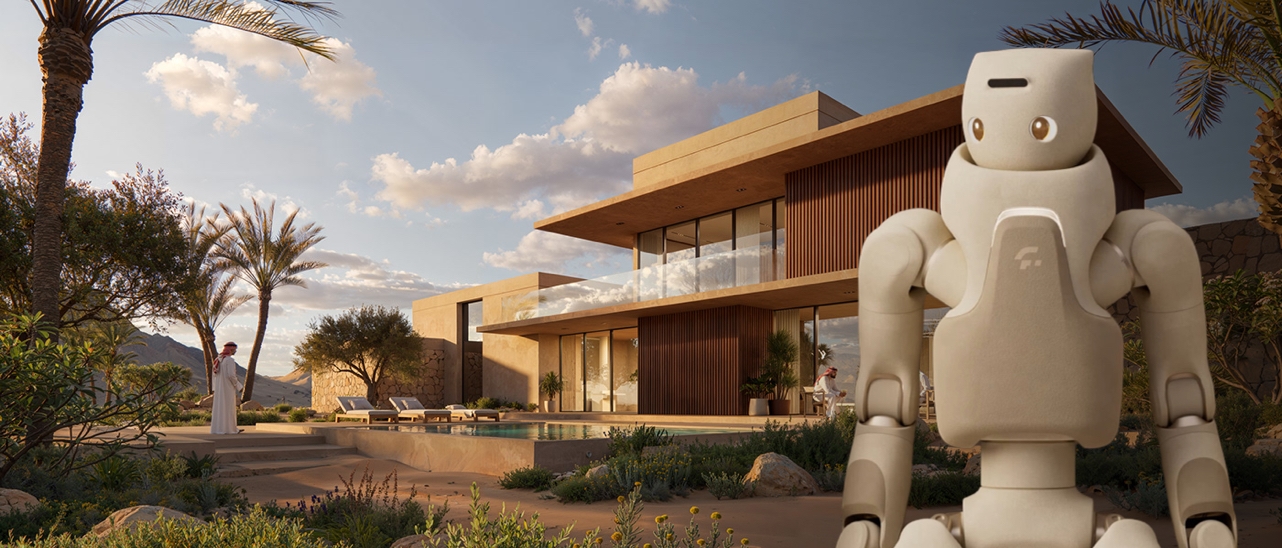
In UBTECH’s own structure, commercial robotics is separate from its industrial, AI education, logistics, and consumer segments. The company’s commercial portfolio currently centers on humanoid service robots, cloud-based intelligent service robots, wheeled humanoid robots, and related service solutions for places such as exhibition halls, transport hubs, office buildings, pharmacies, hospitals, retail stores, and supermarkets.
The commercial lineup shown on UBTECH’s official sites includes products such as Walker C, Walker X, Cruzr S2, Cruzr 1S, and commercial cleaning or delivery systems marketed through UBTECH’s commercial platform. UBTECH’s commercial page frames these products as tools for “enterprise intelligent operations” and “business scenario innovation,” which is a useful summary of how the company positions its commercial robot business.
Design and Features
Product Categories Within UBTECH Commercial Robotics
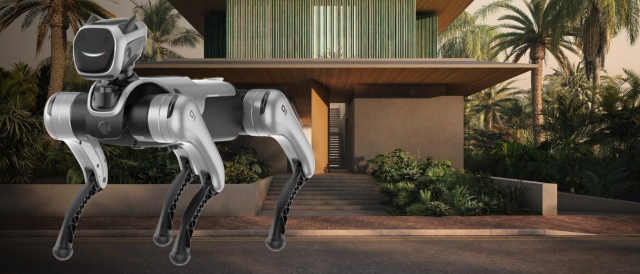
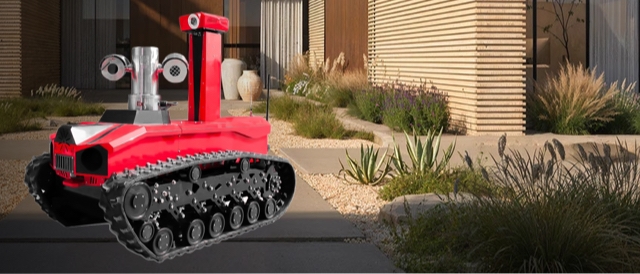
UBTECH’s current commercial robot ecosystem is not a single machine but a family of platforms. On its commercial solutions page, UBTECH highlights Walker C as a humanoid service robot, Cruzr 1S as a cloud-based intelligent service robot, Cruzr S2 as a full-sized wheeled humanoid robot, and a one-stop service robot station focused on delivery, air purification, and patrol functions. That mix shows UBTECH is targeting both interactive front-of-house service and practical operational automation.
The company’s humanoid line is especially prominent. UBTECH’s application-scenarios page separates humanoids into Industrial products like Walker S-series and Commercial products like Walker C and Walker X, while also showing Cruzr S2 as a wheeled humanoid and Panda Robot as a specialized public-interaction platform. This suggests UBTECH treats commercial humanoids as a core part of its business strategy rather than as one-off demonstration products.
Human-Centered Design
UBTECH’s commercial robots are designed primarily for shared human environments rather than factory cells. Official scenario pages emphasize reception, guidance, live Q&A support, office greeting, retail assistance, airport services, and exhibition tours. That means the design priorities are not just locomotion and payload, but also appearance, communication, navigation safety, multilingual interaction, and ease of deployment.
Walker C illustrates this particularly well. UBTECH describes it as a full-size, electric-driven embodied intelligent humanoid robot powered by its self-developed Embodied Interactive Large Model, with multilingual interaction for exhibition halls and office buildings. Official application descriptions list greeting and reception, smart guide services, AI curator-style narration, and entertainment-oriented human-robot interaction.
Walker X, by contrast, emphasizes more advanced physical capability. UBTECH says it incorporates six AI technologies, upgraded vision-based navigation, hand-eye coordination, and a comprehensive perception system. The product page also lists 41 high-performance servo joints, a 160° face-surrounding 4.6K HD dual flexible curved screen, a 4-dimensional light language system, modular design, and a removable battery.
Technology and Specifications
Core Technology Stack
UBTECH says its broader robotics platform is built on full-stack humanoid technologies that combine robotic motion planning and control, high-performance servo actuators, AI systems modeled on human-like brain and cerebellum functions, SLAM and autonomous technology, visual servo operation, and human-robot interaction. That matters because UBTECH’s commercial robots are not presented as isolated devices; they are built on a common in-house robotics technology base.
Walker C Specifications
Walker C is one of UBTECH’s clearest commercial humanoid examples because the official page publishes a visible specification block. UBTECH lists Walker C at 163 cm height, 43 kg weight, 20 degrees of freedom, 48V 15Ah lithium battery, 1.5 hours charging time, 2 hours walking time, 4 hours standing time, RGBD cameras, structured-light 3D cameras, high-precision inertial measurement, and Wi-Fi/Bluetooth connectivity. UBTECH also states Walker C maintains a steady running pace of 6 km/h and uses U-SLAM navigation for autonomous tour routing.
Walker X Specifications
Walker X’s official page provides a different profile. UBTECH lists 130 cm height, 63 kg weight, and 41 high-performance servo joints. It also highlights U-SLAM navigation and autonomous path planning, excellent environment and human perception, and hand-eye coordination for object manipulation. UBTECH states that Walker X uses a four-eye system, dual RGBD sensors, 7-DOF robot arms, and 6-DOF force-controlled human-like hands, and says it can operate objects such as refrigerators, coffee machines, and vacuum cleaners.
Commercial Cleaning and Service Systems
UBTECH’s commercial site also promotes non-humanoid service robots. Its commercial cleaning pages describe CLEINBOT CC201 as an intelligent commercial cleaning robot with compact design, flexible automatic navigation, efficient cleaning, and full-coverage operation, while CLEINBOT M79 is positioned for medium and large areas with 120-liter dual water tanks and a cleaning chassis designed for deep cleaning without damaging floors. These products show that UBTECH’s commercial strategy extends beyond humanoids into practical service robotics for facilities management.
Applications and Use Cases
Exhibition Halls and Museums
UBTECH heavily emphasizes exhibition halls as a commercial application. Walker robots are described as supporting multimodal interaction through text, voice, vision, motion, and environmental elements, with official use cases including visitor reception, guidance and introduction, AIoT control, and entertainment performance. UBTECH’s commercial page also cites deployments at the China Pavilion at Expo 2025 Osaka, Yunnan Provincial Museum, MoCA Shanghai, and the Ping An International Smart City Exhibition Hall.
Office Buildings and Service Centers
UBTECH explicitly lists office buildings and service centers as commercial scenarios. Walker C is presented for office building greeting and reception and service-center live Q&A support, while UBTECH’s application-scenarios page says Walker can integrate accurate face recognition with digital surveillance to greet visitors, automatically scan them, serve drinks, and control smart devices.
Airports and Transport Hubs
UBTECH also targets transport hubs and airports. Walker C’s official page lists “transport hubs” as a smart guide scenario, while the commercial solutions page names airport service robotic solutions and cites deployments at Shenzhen Baoan International Airport, Paris Charles de Gaulle Airport, Chengdu Tianfu International Airport, and Kunming Changshui International Airport.
Retail and Supermarkets
Retail is another major vertical in UBTECH’s commercial strategy. The company says its multi-scenario solutions are designed for retail and supermarkets, and the official commercial page cites real-world examples including BYD’s overseas stores, Denza vehicle showrooms, Easyhome retail stores, and Alibaba Koubei smart restaurant activity. This suggests UBTECH sees commercial robots as tools for both retail assistance and brand-experience environments.
Public Services, Healthcare, and Facilities
UBTECH’s official commercial page also mentions pharmacies, hospitals, and public services, and lists cases such as the Shenzhen Administrative Service Hall, Nanshan Exit-Entry Administration, and Nanshan District Administration of State Taxation. Combined with its cleaning-robot lineup, this points to a commercial robotics business that includes both customer-facing interaction and behind-the-scenes operational support.
Advantages / Benefits
One of UBTECH commercial robots’ main advantages is portfolio breadth. The company is not limited to one format; it offers bipedal humanoids, wheeled humanoids, cloud-based service robots, and cleaning robots, which lets it address different customer needs with different embodiments. That flexibility is unusual compared with robotics vendors focused on a single niche.
A second advantage is full-stack technology ownership. UBTECH says it independently developed its humanoid robotics stack, from servo actuators to SLAM and human-robot interaction, and by June 2025 held more than 2,790 robotics- and AI-related patents, with nearly 58% invention patents. That level of in-house technology development can matter to enterprise buyers looking for long-term platform continuity.
A third advantage is proven commercial deployment across visible public scenarios. UBTECH’s official case lists cover expo pavilions, museums, airports, office services, retail locations, and government halls. That does not prove universal maturity across every product, but it does show that UBTECH commercial robots are being positioned and demonstrated in actual business settings rather than only in laboratories.
FAQ Section
What are UBTECH commercial robots?
UBTECH commercial robots are the company’s business-oriented service robots for scenarios such as exhibition halls, office buildings, transport hubs, retail stores, supermarkets, pharmacies, hospitals, and public-service venues. The lineup includes humanoids, wheeled service robots, and cleaning robots.
How do UBTECH commercial robots work?
They combine autonomous navigation, perception sensors, AI interaction, and task-specific hardware. Depending on the model, they may greet visitors, guide tours, answer questions, carry items, clean floors, or assist with sorting and handling. UBTECH says its broader platform includes SLAM, visual servo operation, human-robot interaction, and ROSA 2.0.
Why are UBTECH commercial robots important?
They are important because they show how one robotics company is commercializing humanoid and service robots across multiple business scenarios, from exhibitions and airports to offices and retail. UBTECH also positions its Walker platform as the first commercialized biped life-sized humanoid robot in China.
What are the benefits of UBTECH commercial robots?
The main benefits are multiscenario deployment, humanoid and wheeled platform options, AI-driven interaction, autonomous navigation, and support for operational efficiency and customer-facing service innovation. For some products, the benefit is human-like interaction; for others, it is practical delivery or cleaning automation.
Are UBTECH commercial robots the same as UBTECH industrial robots?
No. UBTECH separates commercial products such as Walker C and Walker X from industrial products such as the Walker S series. Commercial robots focus on service and interaction settings, while industrial robots focus on manufacturing tasks.
Summary
UBTECH commercial robots are a broad portfolio of business-oriented service robots that include humanoid service robots, wheeled service robots, delivery systems, and cleaning robots. Official UBTECH materials show a commercial strategy focused on exhibition halls, airports, office buildings, retail, public services, pharmacies, and hospitals, supported by a full-stack robotics technology base and a growing list of public deployment cases. For organizations researching current commercial service robotics from UBTECH, the company stands out for combining humanoid interaction, enterprise service automation, and multi-scenario commercial deployment in one product ecosystem.