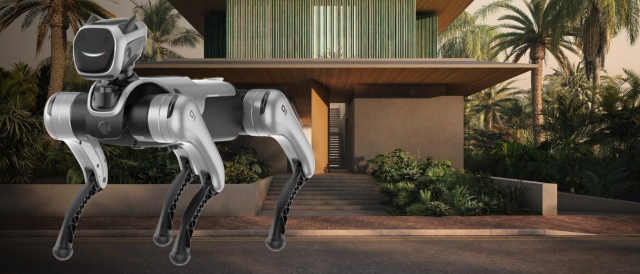
Unitree G1-D
חקור את Unitree G1-D עם סיכום ניטרלי, מבוסס עובדות, של טכנולוגיה, יישומים, יתרונות וקריטריונים לבחירה עבור פתרונות רובוטים מודרניים.
מבוא וסקירה
סקירה קצרה: חקור את Unitree G1-D עם סיכום ניטרלי, מבוסס עובדות, של טכנולוגיה, יישומים, יתרונות וקריטריונים לבחירה עבור פתרונות רובוטים מודרניים.
Unitree G1-D הוא חלק משוק רובוטיקה המתרחב במהירות ובו משולבים אוטומציה, בינה מלאכותית, חיישנים ומערכות מכניות חזקות כדי לפתור משימות מעשיות בתעשייה, שירות, מחקר ופעולות ציבוריות. יש להבין קטגוריית רובוט מודרני כיותר ממכונה אחת: היא כוללת חומרה, תוכנה, פונקציות בטיחות, אינטגרציה, הדרכה, תחזוקה וההקשר העסקי שבו הטכנולוגיה יוצרת ערך. דף זה מספק סקירה מקיפה, סמכותית ומותאמת לחיפוש של Unitree G1-D עבור מקבלי החלטות, מהנדסים, קונים, מחנכים וחוקרים.
העניין ב-Unitree G1-D מונע על ידי הצורך בפריון גבוה יותר, איכות נתונים טובה יותר, תהליכים עקביים יותר וטיפול בטוח יותר במשימות שעלולות להיות כבדות, חוזרות על עצמן, מסוכנות או גוזלות זמן עבור אנשים. כאשר ארגונים מחקרים קונים Unitree G1-D, Unitree G1-D למכירה, מחיר Unitree G1-D או עלות Unitree G1-D, ההחלטה היא רק לעתים רחוקות לגבי רכישה. הוא כולל גם את מחזור החיים המלא: מפרט, הטמעה, הדרכת מפעילים, שירות, חלקי חילוף, עדכוני תוכנה, אבטחת סייבר ותמיכה ארוכת טווח.
עיצוב ותכונות
העיצוב של Unitree G1-D משתנה בהתאם למשימה, הסביבה והאוטונומיה הצפויה. חלק מהמערכות נייחות ומותאמות לדיוק, בעוד אחרות ניידות ובנויות לניווט בחללים מורכבים. פתרונות רובוטים אמינים משלבים בדרך כלל יציבות מכנית, מפעילים אמינים, היתוך חיישנים, ממשקי משתמש אינטואיטיביים ופרוטוקולי בטיחות מתועדים. גישה לשירות, מודולריות וארגונומיה חשובים גם מכיוון שרובוטים עובדים לעתים קרובות ליד מפעילים, טכנאים, לקוחות או ציוד אוטומטי אחר.
מאפיינים אופייניים עשויים לכלול זרימות עבודה ניתנות לתכנות, ניטור מרחוק, אביזרים מודולריים, אבחון בזמן אמת, זיהוי התנגשות, מצלמות, LiDAR, חיישני כוח, תפסנים, ניהול סוללה ואינטגרציה עם מערכות IT או אוטומציה קיימות. עבור קטגוריות ניידות, מיפוי, תכנון מסלול, הימנעות ממכשולים וניהול צי חשובים לעתים קרובות. עבור רובוטים שעובדים קרוב לאנשים, הגבלת מהירות, עצירת חירום, יתירות ותקשורת סטטוס ברורה הן דרישות עיצוב חיוניות.
טכנולוגיה ומפרטים
הטכנולוגיה מאחורי Unitree G1-D היא בדרך כלל שילוב של מכניקה, אלקטרוניקה ותוכנה. רובוט עשוי להשתמש במנועים חשמליים, כוננים הרמוניים, מפעילים ליניאריים, רכיבים הידראוליים או מפרקים מיוחדים בהתאם לדרישות לכוח, מהירות ודיוק. הבקרה מטופלת על ידי בקרים תעשייתיים, מחשבי קצה או מערכות משובצות המעבדות נתוני חיישנים וממירות אותם לתנועה, ניווט או החלטות.
יש להעריך תמיד את המפרט מול היישום המיועד. פרמטרים רלוונטיים יכולים לכלול מטען, טווח הגעה, זמן ריצה, זמן טעינה, מהירות, דיוק מיקום, דירוג IP, טמפרטורת הפעלה, פרוטוקולי תקשורת, אישורי בטיחות, ממשקי API של תוכנה ותאימות אביזרים. מחיר רכישה נמוך יכול להיות פחות חשוב מתפעול יציב, תיעוד ושירות, בעוד שמודל מתקדם הגיוני רק כאשר היכולות שלו משמשות בפועל בתהליך העבודה.
יישומים ומקרי שימוש
ניתן להשתמש ב-Unitree G1-D על פני ייצור, לוגיסטיקה, פיקוח, חינוך, מחקר, בריאות, שירות, אבטחה ופעולות שטח. בסביבות תעשייתיות, רובוטים עוזרים לשפר את התפוקה, להפחית שגיאות וליצור תהליכים צפויים יותר. בסביבות שירות או מול לקוחות, הם יכולים לשפר את הזמינות, מסירת המידע וטיפול במשימות שגרתיות. במחקר ופיתוח, פלטפורמות רובוטים מאפשרות לבחון ניווט, מניפולציה, אינטראקציה בין אדם לרובוט וקבלת החלטות מבוססות בינה מלאכותית.
ארגונים צריכים להגדיר את הבעיה לפני שהם בוחרים בטכנולוגיה. מפרט דרישות טוב מתאר את המשימה, הסביבה, המטען, צרכי הבטיחות, נקודות האינטגרציה, רמת מיומנות המפעיל, דרישות הנתונים ומחזור השירות הצפוי. לאחר מכן ניתן להשוות את Unitree G1-D באמצעות מאפיינים הניתנים לאימות במקום טענות שיווק רחבות. זה מפחית את סיכון הרכש ומקל על ההחלטה אם הפתרון צריך להיות סטנדרטי, מותאם אישית או חלק מפרויקט אוטומציה גדול יותר.
יתרונות ומגבלות
היתרונות העיקריים של Unitree G1-D כוללים בדרך כלל יעילות גבוהה יותר, יכולת חזרה משופרת, בטיחות טובה יותר, לכידת נתונים חזקה יותר והיכולת לשחרר אנשים מעבודה מונוטונית או מסוכנת. רובוטים יכולים לפעול עם תהליכים יציבים, לתעד אירועים ולספק תוצאות שקשה לתחזק באופן ידני לאורך תקופות ארוכות. עבור ארגונים רבים, רובוטיקה הופכת אפוא ליכולת אסטרטגית ולא לרכישת ציוד פשוטה.
יש להעריך מגבלות באופן ריאלי. היישום דורש תכנון, בדיקה, הדרכה, אינטגרציה ולעיתים שינויים בתהליכי עבודה קיימים. סביבות עם משתנים בלתי צפויים רבים עשויים לדרוש חיישנים נוספים, התאמת תוכנה או פיקוח אנושי. הכלכלה הכוללת כוללת לא רק רכישה, אלא גם תחזוקה, חלקי חילוף, הסכמי שירות, צריכת אנרגיה, אבטחת סייבר ובניית יכולת פנימית. מסיבה זו, יש להבין את מחיר Unitree G1-D ואת עלות Unitree G1-D כעלות הבעלות הכוללת, ולא כמספר בודד.
קנייה, הערכה ויישום באסיה
כאשר משתמשים מחפשים לקנות Unitree G1-D או Unitree G1-D למכירה, נקודת ההתחלה הטובה ביותר היא דף הקטגוריות הרלוונטי, שבו ניתן להשוות דגמים, אביזרים ופתרונות קשורים באותו הקשר. עבור השווקים באסיה, קונים צריכים לעתים קרובות לשקול תמיכה בשפה, משלוח אזורי, שירות אחריות, תיעוד, תאימות, הדרכה ושילוב עם תנאי ההפעלה המקומיים. מחירים ספציפיים אינם מפורטים כאן מכיוון שהתמחור הנכון תלוי בתצורה, נפח, אביזרים, רמת תמיכה, משלוח וכל דרישות אינטגרציה.
יישום מובנה כולל בדרך כלל ניתוח צרכים, אימות טכני, פרויקט פיילוט, הערכת סיכונים, הדרכת מפעילים ואופטימיזציה מתמשכת. יש לתעד מראש קריטריונים להצלחה: זמן פעולה, זמן מחזור, שיעור שגיאות, תקריות בטיחות, שימוש באנרגיה, איכות נתונים וקבלת המשתמש. זה מאפשר להעריך את Unitree G1-D באופן אובייקטיבי לאחר הפריסה.
שאלות נפוצות
מה זה Unitree G1-D?
Unitree G1-D מתייחס לפתרונות רובוטים, מערכות או קטגוריות המיועדות למשימות ספציפיות באוטומציה, שירות, מחקר, תפעול או עבודת שטח.
איך Unitree G1-D עובד?
Unitree G1-D פועלת על ידי שילוב של רכיבים מכניים, חיישנים, בקרים ותוכנה התופסים את הסביבה ומבצעים פעולות מתוכנתות או אוטונומיות.
מדוע Unitree G1-D חשוב?
Unitree G1-D חשוב מכיוון שרובוטיקה יכולה לשפר את הבטיחות, הפרודוקטיביות, הדיוק וקבלת החלטות מונעת נתונים בארגונים מודרניים.
מהם היתרונות של Unitree G1-D?
היתרונות כוללים תהליכים עקביים יותר, עומס עבודה ידני מופחת, תיעוד טוב יותר, זמינות גבוהה יותר ויכולת לבצע אוטומציה של משימות מורכבות או מסוכנות.
מה משפיע על מחיר Unitree G1-D ועל עלות Unitree G1-D?
המחיר והעלות מושפעים מתצורה, אביזרים, תוכנה, תמיכה, משלוח, אינטגרציה, הדרכה ותחזוקה ארוכת טווח. השתמש באותו דף קטגוריה כדי לבקש הערכה רלוונטית.
איפה אני יכול לקנות Unitree G1-D?
הנתיב הרלוונטי ביותר הוא להשתמש בדף קטגוריה זה כדי להשוות אפשרויות זמינות וליצור קשר עם המפיץ לגבי תצורה, זמינות והשלבים הבאים.
סיכום
Unitree G1-D הוא חלק חשוב ברובוטיקה ואוטומציה מודרנית. עם המפרט הנכון, הסקירה הטכנית ותוכנית ההטמעה, הקטגוריה יכולה לתמוך בתהליכים בטוחים, יעילים וניתנים להרחבה בין תעשיות ויישומים.
Unitree G1-D Wheeled Humanoid Robot
The G1-D emerged from a specific market need that the bipedal G1 cannot efficiently address: large-scale, sustained robotic data collection for training humanoid manipulation AI. Training the vision-language-action (VLA) models and imitation learning policies that enable robots to handle diverse real-world manipulation tasks requires millions of robot-object interaction episodes across diverse object categories, environments, and task variations. Generating this data through teleoperated bipedal robots is expensive and operationally constrained: bipedal platforms have limited operational endurance (1 to 2 hours per battery charge), require careful balance management during teleoperation, and impose operational overhead on the human teleoperation staff.
The G1-D addresses these constraints through its wheeled design. The Flagship's 6-hour battery life enables extended data collection sessions without frequent recharging interruptions. The wheeled base's inherent stability eliminates the balance overhead that bipedal teleoperation requires, reducing cognitive load on teleoperation staff and improving the quality of demonstration data. The wrist-mounted cameras capture the hand-object visual perspective that is most informative for training manipulation policies — a viewpoint that the head-mounted camera of many existing data collection systems cannot provide.
Unitree's timing with the G1-D also reflects the broader industry context of the "robot training data" market. As general-purpose humanoid AI becomes increasingly dependent on large datasets of human demonstrations, specialized data collection platforms that can efficiently generate high-quality robot demonstration data at scale represent a distinct and growing market segment from the general-purpose research humanoid segment.
The G1-D's integration into Unitree's data collection software framework — providing end-to-end tools for teleoperation data capture, annotation, training pipeline management, and policy deployment — positions it as a complete operational system rather than just a robot hardware platform.
Design and Physical Features
Wheeled Mobile Base: Standard vs. Flagship
The fundamental design distinction between the G1-D's two versions is the mobile base:
G1-D Standard: The upper body is mounted on a stationary base — no locomotion, suitable for fixed workstation data collection tasks where the robot is deployed at a specific location and handles objects brought to it. The stationary design simplifies deployment and reduces cost compared to the mobile Flagship.
G1-D Flagship: The upper body is mounted on a differential drive wheeled mobile base supporting movement at up to 1.5 meters per second. The base includes LiDAR sensors, depth cameras, and collision detection units — a full autonomous navigation sensor suite enabling the robot to navigate factory floors, logistics facilities, and laboratory environments without track guidance. The differential drive enables turning-in-place and arc navigation, covering the movement patterns needed for logistics, warehouse, and service data collection deployments.
Height Adjustability: 1260 to 1680 mm
The G1-D's adjustable height — between 1,260 and 1,680 mm — enables the upper body to match different workstation heights, counter heights, and shelving configurations without repositioning the entire mobile base. This height adjustability is critical for data collection across diverse task environments: the robot must be able to reach the specific height of the work surface where the task is performed to generate visually valid training data.
17 to 19 Degrees of Freedom
The G1-D's DOF count is lower than the bipedal G1 EDU family because it does not include the leg DOF that account for 12 of the bipedal G1's total. Without legs, the G1-D's upper body provides:
Standard (17 DOF): Arms and upper body without mobile base actuation DOF. Flagship (19 DOF): Arms and upper body with the mobile base DOF included in the total count.
The arm DOF configuration — with 7 DOF per arm confirmed by Gizmochina's launch coverage — provides the full shoulder-to-wrist workspace needed for manipulation tasks, and the wrist DOF enables the hand to approach objects from any orientation within the arm's reach envelope.
Binocular Head Camera and Dual Wrist Cameras
The G1-D's camera system is specifically designed for manipulation data collection quality:
HD binocular head camera: Provides stereo depth perception from the robot's egocentric viewpoint — the perspective from which an operator using VR teleoperation sees the workspace and the manipulated objects.
HD wrist cameras (one per arm): Mounted at the wrist, these cameras capture the near-field view of the hand-object interaction — the visual data most informative for training grasping and manipulation policies. Wrist cameras see the object from the same perspective the hand approaches it, providing the visual observation data that corresponds directly to the hand configuration and contact events that manipulation AI policies must learn from.
This three-camera configuration — binocular head plus bilateral wrists — captures the complete visual observation needed for both policy learning (what did the robot see when it made each decision?) and behavior cloning (what did the human demonstrator see when they performed each action?).
Technology and Specifications
G1-D Full Specifications
| Specification | Standard | Flagship |
|---|---|---|
| Height | 1,260–1,680 mm | 1,260–1,680 mm |
| Weight | Up to 80 kg | Up to 80 kg |
| Total DOF | 17 | 19 |
| Arm DOF | 7 per arm | 7 per arm |
| Mobile Base | Stationary | Differential drive |
| Mobile Speed | N/A | Up to 1.5 m/s |
| Base Sensors | N/A | LiDAR, depth cameras, collision detection |
| Battery Runtime | Standard | Up to 6 hours |
| AI Compute | NVIDIA Jetson Orin NX (100 TOPS) | NVIDIA Jetson Orin NX (100 TOPS) |
| Head Camera | HD binocular | HD binocular |
| Wrist Cameras | HD (one per wrist) | HD (one per wrist) |
| End-Effector Options | 2-finger, Dex3-1, Dex3-1+tactile, 5-finger | 2-finger, Dex3-1, Dex3-1+tactile, 5-finger |
| SDK | Full (data collection + AI training framework) | Full (data collection + AI training framework) |
Modular End-Effector System
The G1-D's modular end-effector design is central to its data collection value proposition. Four end-effector configurations are supported:
Two-finger gripper: The simplest configuration for pick-and-place tasks requiring robust grasping of standardized objects. Suitable for logistics sorting, object transport, and basic manipulation data collection where full dexterity is not the research objective.
Dex3-1 three-finger hands (without tactile): Force-position controlled three-finger manipulation for data collection of grasping tasks across diverse object shapes, covering the grasping patterns that three-finger kinematic analysis enables.
Dex3-1 three-finger hands with tactile sensors: Same kinematic configuration with distributed contact pressure sensing — enabling data collection that captures not only visual and joint state observations but also the contact force distribution during grasps, providing richer training data for tactile-aware manipulation policy development.
Five-finger dexterous hands: For data collection of tasks requiring the full human grasp taxonomy — tool use, fine manipulation, and complex multi-finger coordination — where the three-finger configuration cannot reproduce the demonstrator's hand posture.
NVIDIA Jetson Orin NX (100 TOPS) and Data Collection Software
The Jetson Orin NX provides 100 TOPS of GPU-accelerated compute for on-device processing during data collection sessions: real-time visual perception, teleoperation policy assistance (where the robot's AI helps guide the teleoperator toward successful grasps), and data annotation (labeling captured frames with object categories, task stages, and success outcomes).
Unitree's data collection software framework — which integrates with the G1-D hardware — provides tools for managing the complete AI workflow: session management, synchronized multi-modal data recording (joint state, camera streams, tactile sensor data), data annotation workflows, and training pipeline integration. This full-stack software differentiates the G1-D from robots that capture raw data without an integrated pipeline for converting that data into trained AI models.
Roller Skate and Ice Skate Demonstrations: Adaptive Locomotion Interface
The April 2026 demonstration of the G1-D on roller skates and ice skates reveals a design characteristic of the G1-D's wheeled-leg integration: the control architecture is generalized enough to manage balance and locomotion across different wheel-like locomotion interfaces. On roller skates, the robot executes 360-degree turns and one-leg spins; on ice skates, it maintains balance on narrow blade contacts. A front flip — demonstrated on wheels — extends the athletic capability into the vertical plane.
Interesting Engineering's coverage quotes Unitree: "Humanoid robots are the ideal form of general-purpose robots (perfect for general AI and human-derived data). They can work without wheels — but they can also have wheels if they want. Whatever works." This design philosophy — agnosticism between wheeled and legged locomotion — reflects the G1-D's positioning as a platform where capability coverage matters more than locomotion purity.
Applications and Use Cases
Large-Scale Manipulation Data Collection
The G1-D's primary designed application is generating manipulation training data for humanoid AI. Research institutions and AI companies developing general-purpose robot manipulation policies require millions of labeled robot demonstration episodes across hundreds of object categories and task types. The G1-D's 6-hour Flagship battery, stable wheeled base, multi-camera configuration, and integrated data management software enable sustained data collection workflows at a scale that bipedal teleoperation systems cannot efficiently achieve.
Industrial and Service Task Execution
The G1-D Flagship's 1.5 m/s mobile base, LiDAR navigation, and modular end-effectors make it suitable for deployment in industrial logistics, warehouse operations, and service environments where the robot must navigate between workstations and perform manipulation tasks across a facility. Applications include inventory inspection, object sorting and transport, shelf restocking, and quality inspection support.
Warehouse Automation
The Flagship's combination of autonomous navigation (LiDAR + depth camera mobile base) and modular manipulation end-effectors addresses warehouse automation tasks — order picking, bin handling, parcel sorting — in a wheeled humanoid form factor that navigates standard warehouse aisles without the terrain limitations of legged-only platforms.
Retail and Consumer Interaction
With the five-finger dexterous hand option and HD visual system, the G1-D is suitable for retail environments where the robot interacts with customers, retrieves products from shelves, and handles the full diversity of retail product shapes and packaging materials. The wheeled base's stability compared to bipedal operation provides reliability for sustained retail deployment.
Research: Wheeled-Legged Hybrid Locomotion Control
The roller skate and ice skate demonstrations position the G1-D as a research substrate for wheeled-legged hybrid locomotion control — an increasingly active research area studying how robots can efficiently coordinate wheel and leg actuation for different terrain and surface conditions. For research teams studying this hybrid locomotion domain, the G1-D provides a commercially available platform with demonstrated performance in unconventional locomotion interfaces.
Advantages and Benefits
6-Hour Flagship Battery for Full-Shift Data Collection: The Flagship's 6-hour runtime enables complete shift-length data collection sessions without mid-session battery interruptions — more than triple the G1 bipedal's 2-hour runtime for the same platform size.
Stable Wheeled Base Eliminates Bipedal Balance Overhead: Wheeled locomotion eliminates the computational and operational overhead of continuous bipedal balance management, enabling the robot's full compute capacity and the teleoperator's full attention to be devoted to manipulation quality rather than balance management.
Dual Wrist Cameras for High-Quality Manipulation Training Data: The wrist-mounted cameras capture the hand-object visual perspective that directly corresponds to manipulation policy inputs — a critical data quality advantage for training generalizable grasping AI.
Height-Adjustable Upper Body for Multi-Workstation Deployment: The 1,260 to 1,680 mm height range enables the G1-D to match diverse workstation heights across different data collection sites without hardware modification.
Modular End-Effectors for Task-Specific Data Collection: The four end-effector options — two-finger, Dex3-1, Dex3-1+tactile, five-finger — configure the platform for data collection across different manipulation research objectives within the same hardware investment.
Full-Stack Data Collection Software Framework: The integrated software for session management, multi-modal data recording, annotation, and training pipeline integration reduces the operational overhead of running large-scale data collection programs.
Comparison: G1-D vs. Bipedal G1 EDU
| Feature | G1 EDU Bipedal | G1-D Wheeled |
|---|---|---|
| Locomotion | Bipedal walking | Wheeled differential drive |
| Max Speed | 2 m/s (walking) | 1.5 m/s (Flagship) |
| Battery Runtime | ~2 hours | Up to 6 hours (Flagship) |
| Total DOF | 23 to 43 | 17 to 19 |
| Wrist Cameras | No | Yes (HD, bilateral) |
| Primary Use | Research, manipulation | Data collection, AI training |
| Terrain Capability | Stairs, ramps, outdoor | Flat floor, indoor |
| End-Effector Options | Multiple | Multiple (same options) |
| AI Compute | 100 TOPS (EDU) | 100 TOPS |
| Full SDK | Yes (EDU) | Yes |
The G1-D's longer battery life, wrist cameras, and data-collection-optimized software make it the superior platform for AI training data generation. The bipedal G1 EDU's stairs and terrain capability make it superior for research requiring outdoor locomotion and multi-level environment navigation.
Frequently Asked Questions (FAQ)
What is the Unitree G1-D? The Unitree G1-D is Unitree Robotics' first wheeled humanoid robot, launched in November 2025. It combines a human-like upper body with dual 7-DOF arms on a wheeled mobile base, designed primarily for large-scale data collection, AI model training, and real-world task execution. It is available in Standard (stationary, 17 DOF) and Flagship (mobile differential drive at 1.5 m/s, 19 DOF, up to 6-hour battery) versions. Height adjusts between 1,260 and 1,680 mm. It includes HD binocular head cameras and HD wrist cameras, NVIDIA Jetson Orin NX (100 TOPS), and supports modular end-effectors including two-finger grippers, Dex3-1 three-finger hands with or without tactile sensors, and five-finger dexterous hands.
How does the Unitree G1-D differ from the bipedal G1? The bipedal G1 uses legs for locomotion, providing stair climbing, outdoor terrain navigation, and up to 43 DOF across the full body at approximately 2 hours of battery runtime. The G1-D uses a wheeled base for locomotion, providing up to 1.5 m/s on flat surfaces with up to 6 hours of battery runtime at 17 to 19 DOF in the arms and upper body. The G1-D adds wrist cameras for manipulation data quality that the bipedal G1 lacks, and integrates with a dedicated data collection and AI training software framework. The G1-D is optimized for sustained data collection and task execution on flat industrial floors; the bipedal G1 is optimized for research requiring terrain versatility.
What did the Unitree G1-D roller skate and ice skate demonstration show? An April 2026 video showed the G1-D performing on roller skates and ice skates — executing 360-degree turns, one-leg spins, and front flips on wheels, and maintaining balance on narrow ice skate blade contacts. The demonstration illustrates the G1-D's wheeled-legged control architecture's ability to generalize balance and locomotion coordination to different wheel-like locomotion interfaces beyond its standard wheeled base, and reflects Unitree's design philosophy that humanoid robots should be able to use "whatever works" for locomotion in different contexts.
What end-effectors does the G1-D support? The G1-D supports four modular end-effector configurations: a two-finger gripper for robust pick-and-place of standardized objects; Dex3-1 three-finger dexterous hands without tactile sensors; Dex3-1 three-finger hands with integrated tactile sensor arrays; and five-finger dexterous hands for full human grasp taxonomy coverage. The modular design allows the same G1-D base platform to be configured for different data collection research objectives by swapping end-effectors.
Summary
The Unitree G1-D Wheeled Humanoid Robot represents Unitree's first purpose-designed data collection and task execution humanoid platform — combining a human-like upper body with 7-DOF dual arms, HD binocular head cameras, bilateral HD wrist cameras, NVIDIA Jetson Orin NX (100 TOPS) compute, and a modular end-effector system on a wheeled mobile base that achieves up to 1.5 m/s and up to 6 hours of operational endurance in the Flagship configuration. Launched in November 2025 and demonstrated performing on roller skates and ice skates in April 2026, the G1-D addresses the large-scale AI training data generation challenge that bipedal humanoid platforms cannot efficiently solve due to their limited battery endurance and balance management overhead. For AI research organizations, manufacturing firms developing humanoid robot policies, and data collection service providers needing a sustained, stable, wrist-camera-equipped manipulation data platform, the G1-D represents a commercially available and well-supported entry into the specialized wheeled humanoid data platform category.