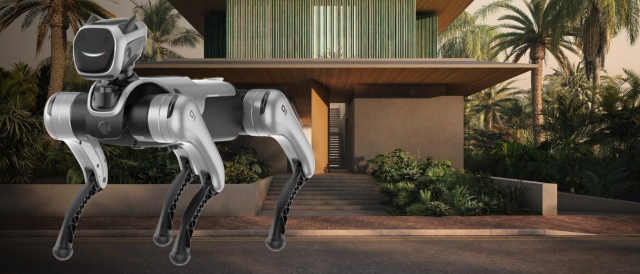
Unitree G1-D
最新のロボット ソリューションのテクノロジー、アプリケーション、利点、選択基準に関する中立的で事実に基づいた概要で Unitree G1-D を探索してください。
概要と概要
簡単な概要: 最新のロボット ソリューションのテクノロジー、アプリケーション、利点、選択基準に関する中立的で事実に基づいた概要を使用して Unitree G1-D を探索します。
Unitree G1-D は、オートメーション、人工知能、センサー、堅牢な機械システムを組み合わせて、産業、サービス、研究、公共事業における実際的なタスクを解決する、急速に拡大するロボット市場の一部です。最新のロボット カテゴリは、単一の機械以上のものとして理解される必要があります。これには、ハードウェア、ソフトウェア、安全機能、統合、トレーニング、メンテナンス、およびテクノロジーが価値を生み出すビジネス コンテキストが含まれます。このページは、意思決定者、エンジニア、バイヤー、教育者、研究者向けに、Unitree G1-D の包括的で権威のある、検索に最適化された概要を提供します。
Unitree G1-D への関心は、より高い生産性、より優れたデータ品質、より一貫したプロセス、そして人にとって重く、反復的で、危険で、または時間がかかる可能性のあるタスクのより安全な処理の必要性によって引き起こされています。組織が Unitree G1-D の購入、販売用の Unitree G1-D、Unitree G1-D の価格、または Unitree G1-D のコストを調査する場合、購入だけが決定されることはほとんどありません。また、仕様、実装、オペレータートレーニング、サービス、スペアパーツ、ソフトウェアアップデート、サイバーセキュリティ、長期サポートといったライフサイクル全体も含まれます。
デザインと機能
Unitree G1-D の設計は、タスク、環境、および期待される自律性によって異なります。固定式で精度が最適化されたシステムもあれば、移動式で複雑な空間でのナビゲーション用に構築されたシステムもあります。信頼性の高いロボット ソリューションは通常、機械的安定性、信頼性の高いアクチュエータ、センサー フュージョン、直感的なユーザー インターフェイス、文書化された安全プロトコルを組み合わせています。ロボットはオペレーター、技術者、顧客、またはその他の自動化機器の近くで作業することが多いため、サービスへのアクセス、モジュール性、人間工学も重要です。
一般的な機能には、プログラム可能なワークフロー、リモート監視、モジュラーアクセサリ、リアルタイム診断、衝突検出、カメラ、LiDAR、力センサー、グリッパー、バッテリー管理、既存の IT または自動化システムとの統合などが含まれます。モバイル カテゴリでは、マッピング、ルート計画、障害物回避、車両管理が重要になることがよくあります。人の近くで動作するロボットの場合、速度制限、緊急停止、冗長性、および明確なステータス通信が必須の設計要件です。
技術と仕様
Unitree G1-D の背後にあるテクノロジーは、通常、機械、電子機器、ソフトウェアの組み合わせです。ロボットは、力、速度、精度の要件に応じて、電気モーター、ハーモニックドライブ、リニアアクチュエーター、油圧コンポーネント、または特殊なジョイントを使用する場合があります。制御は産業用コントローラー、エッジコンピューター、またはセンサーデータを処理して動き、ナビゲーション、または決定に変換する組み込みシステムによって処理されます。
仕様は常に、意図されたアプリケーションに対して評価される必要があります。関連するパラメータには、ペイロード、到達距離、ランタイム、充電時間、速度、測位精度、IP 定格、動作温度、通信プロトコル、安全認証、ソフトウェア API、アクセサリの互換性などが含まれます。購入価格が安いことは、安定した操作、文書化、サービスよりも重要ではない可能性がありますが、高度なモデルは、その機能がワークフローで実際に使用されて初めて意味を持ちます。
アプリケーションとユースケース
Unitree G1-D は、製造、物流、検査、教育、研究、ヘルスケア、サービス、セキュリティ、現場作業全体で使用できます。産業環境では、ロボットはスループットの向上、エラーの削減、より予測可能なプロセスの作成に役立ちます。サービス環境や顧客対応環境では、可用性、情報配信、日常的なタスク処理を向上させることができます。研究開発では、ロボット プラットフォームにより、ナビゲーション、操作、人間とロボットの対話、AI ベースの意思決定をテストすることができます。
組織はテクノロジーを選択する前に問題を定義する必要があります。適切な要件仕様には、タスク、環境、積載量、安全性のニーズ、統合ポイント、オペレーターのスキル レベル、データ要件、および予想されるサービス サイクルが記述されています。その後、広範なマーケティング上の主張ではなく、検証可能な特性を使用して Unitree G1-D を比較できます。これにより、調達リスクが軽減され、ソリューションを標準にするか、カスタマイズするか、あるいは大規模な自動化プロジェクトの一部にするかの決定が容易になります。
利点と制限
Unitree G1-D の主な利点には、通常、効率の向上、再現性の向上、安全性の向上、より強力なデータ収集、単調または危険な作業から人々を解放する機能などが含まれます。ロボットは、安定したプロセスで動作し、イベントを文書化し、長期間にわたって手動で維持するのが難しい結果を提供できます。したがって、多くの組織にとって、ロボット工学は単なる機器の購入ではなく、戦略的な能力となります。
制限は現実的に評価する必要があります。実装には計画、テスト、トレーニング、統合が必要であり、場合によっては既存のワークフローの変更も必要になります。予測不可能な変数が多い環境では、追加のセンサー、ソフトウェアの適応、または人間の監視が必要になる場合があります。総合的な経済性には、購入だけでなく、メンテナンス、スペアパーツ、サービス契約、エネルギー消費、サイバーセキュリティ、社内能力の構築も含まれます。そのため、Unitree G1-D 価格と Unitree G1-D コストは、単一の数値としてではなく、総所有コストとして理解される必要があります。
アジアでの購入、評価、導入
ユーザーが Unitree G1-D の購入または販売用の Unitree G1-D を検索する場合、モデル、アクセサリ、関連ソリューションを同じコンテキストで比較できる関連カテゴリ ページが最適な出発点となります。アジア市場の場合、購入者は多くの場合、言語サポート、地域配送、保証サービス、文書化、コンプライアンス、トレーニング、および現地の動作条件との統合を考慮する必要があります。正確な価格は構成、容量、アクセサリ、サポート レベル、納期、および統合要件によって異なるため、ここには具体的な価格は記載されていません。
構造化された実装には、通常、ニーズ分析、技術的検証、パイロット プロジェクト、リスク評価、オペレーターのトレーニング、継続的な最適化が含まれます。稼働時間、サイクルタイム、エラー率、安全インシデント、エネルギー使用量、データ品質、ユーザーの受け入れなどの成功基準を事前に文書化する必要があります。これにより、導入後に Unitree G1-D を客観的に評価できるようになります。
よくある質問
キャットネームとは何ですか?
Unitree G1-D は、自動化、サービス、研究、運用、または現場作業における特定のタスク用に設計されたロボット ソリューション、システム、またはカテゴリを指します。
Unitree G1-D はどのように機能しますか?
Unitree G1-D は、環境を認識し、プログラムされたアクションまたは自律的なアクションを実行する機械コンポーネント、センサー、コントローラー、およびソフトウェアを組み合わせることによって機能します。
Unitree G1-D が重要な理由は何ですか?
ロボット工学により、現代の組織における安全性、生産性、精度、データ主導の意思決定が向上するため、Unitree G1-D は重要です。
Unitree G1-D の利点は何ですか?
利点としては、プロセスの一貫性の向上、手動作業負荷の軽減、文書化の改善、可用性の向上、複雑または危険なタスクを自動化する機能などが挙げられます。
Unitree G1-D の価格と Unitree G1-D のコストには何が影響しますか?
価格とコストは、構成、アクセサリ、ソフトウェア、サポート、配信、統合、トレーニング、長期メンテナンスによって影響されます。関連する評価をリクエストするには、同じカテゴリ ページを使用してください。
Unitree G1-D はどこで購入できますか?
最も適切な方法は、このカテゴリ ページを使用して利用可能なオプションを比較し、構成、可用性、次のステップについてディストリビュータに問い合わせることです。
概要
Unitree G1-D は、現代のロボット工学と自動化の重要な部分です。適切な仕様、技術レビュー、実装計画があれば、このカテゴリは、業界やアプリケーション全体で、より安全で効率的かつスケーラブルなプロセスをサポートできます。
Unitree G1-D Wheeled Humanoid Robot
The G1-D emerged from a specific market need that the bipedal G1 cannot efficiently address: large-scale, sustained robotic data collection for training humanoid manipulation AI. Training the vision-language-action (VLA) models and imitation learning policies that enable robots to handle diverse real-world manipulation tasks requires millions of robot-object interaction episodes across diverse object categories, environments, and task variations. Generating this data through teleoperated bipedal robots is expensive and operationally constrained: bipedal platforms have limited operational endurance (1 to 2 hours per battery charge), require careful balance management during teleoperation, and impose operational overhead on the human teleoperation staff.
The G1-D addresses these constraints through its wheeled design. The Flagship's 6-hour battery life enables extended data collection sessions without frequent recharging interruptions. The wheeled base's inherent stability eliminates the balance overhead that bipedal teleoperation requires, reducing cognitive load on teleoperation staff and improving the quality of demonstration data. The wrist-mounted cameras capture the hand-object visual perspective that is most informative for training manipulation policies — a viewpoint that the head-mounted camera of many existing data collection systems cannot provide.
Unitree's timing with the G1-D also reflects the broader industry context of the "robot training data" market. As general-purpose humanoid AI becomes increasingly dependent on large datasets of human demonstrations, specialized data collection platforms that can efficiently generate high-quality robot demonstration data at scale represent a distinct and growing market segment from the general-purpose research humanoid segment.
The G1-D's integration into Unitree's data collection software framework — providing end-to-end tools for teleoperation data capture, annotation, training pipeline management, and policy deployment — positions it as a complete operational system rather than just a robot hardware platform.
Design and Physical Features
Wheeled Mobile Base: Standard vs. Flagship
The fundamental design distinction between the G1-D's two versions is the mobile base:
G1-D Standard: The upper body is mounted on a stationary base — no locomotion, suitable for fixed workstation data collection tasks where the robot is deployed at a specific location and handles objects brought to it. The stationary design simplifies deployment and reduces cost compared to the mobile Flagship.
G1-D Flagship: The upper body is mounted on a differential drive wheeled mobile base supporting movement at up to 1.5 meters per second. The base includes LiDAR sensors, depth cameras, and collision detection units — a full autonomous navigation sensor suite enabling the robot to navigate factory floors, logistics facilities, and laboratory environments without track guidance. The differential drive enables turning-in-place and arc navigation, covering the movement patterns needed for logistics, warehouse, and service data collection deployments.
Height Adjustability: 1260 to 1680 mm
The G1-D's adjustable height — between 1,260 and 1,680 mm — enables the upper body to match different workstation heights, counter heights, and shelving configurations without repositioning the entire mobile base. This height adjustability is critical for data collection across diverse task environments: the robot must be able to reach the specific height of the work surface where the task is performed to generate visually valid training data.
17 to 19 Degrees of Freedom
The G1-D's DOF count is lower than the bipedal G1 EDU family because it does not include the leg DOF that account for 12 of the bipedal G1's total. Without legs, the G1-D's upper body provides:
Standard (17 DOF): Arms and upper body without mobile base actuation DOF. Flagship (19 DOF): Arms and upper body with the mobile base DOF included in the total count.
The arm DOF configuration — with 7 DOF per arm confirmed by Gizmochina's launch coverage — provides the full shoulder-to-wrist workspace needed for manipulation tasks, and the wrist DOF enables the hand to approach objects from any orientation within the arm's reach envelope.
Binocular Head Camera and Dual Wrist Cameras
The G1-D's camera system is specifically designed for manipulation data collection quality:
HD binocular head camera: Provides stereo depth perception from the robot's egocentric viewpoint — the perspective from which an operator using VR teleoperation sees the workspace and the manipulated objects.
HD wrist cameras (one per arm): Mounted at the wrist, these cameras capture the near-field view of the hand-object interaction — the visual data most informative for training grasping and manipulation policies. Wrist cameras see the object from the same perspective the hand approaches it, providing the visual observation data that corresponds directly to the hand configuration and contact events that manipulation AI policies must learn from.
This three-camera configuration — binocular head plus bilateral wrists — captures the complete visual observation needed for both policy learning (what did the robot see when it made each decision?) and behavior cloning (what did the human demonstrator see when they performed each action?).
Technology and Specifications
G1-D Full Specifications
| Specification | Standard | Flagship |
|---|---|---|
| Height | 1,260–1,680 mm | 1,260–1,680 mm |
| Weight | Up to 80 kg | Up to 80 kg |
| Total DOF | 17 | 19 |
| Arm DOF | 7 per arm | 7 per arm |
| Mobile Base | Stationary | Differential drive |
| Mobile Speed | N/A | Up to 1.5 m/s |
| Base Sensors | N/A | LiDAR, depth cameras, collision detection |
| Battery Runtime | Standard | Up to 6 hours |
| AI Compute | NVIDIA Jetson Orin NX (100 TOPS) | NVIDIA Jetson Orin NX (100 TOPS) |
| Head Camera | HD binocular | HD binocular |
| Wrist Cameras | HD (one per wrist) | HD (one per wrist) |
| End-Effector Options | 2-finger, Dex3-1, Dex3-1+tactile, 5-finger | 2-finger, Dex3-1, Dex3-1+tactile, 5-finger |
| SDK | Full (data collection + AI training framework) | Full (data collection + AI training framework) |
Modular End-Effector System
The G1-D's modular end-effector design is central to its data collection value proposition. Four end-effector configurations are supported:
Two-finger gripper: The simplest configuration for pick-and-place tasks requiring robust grasping of standardized objects. Suitable for logistics sorting, object transport, and basic manipulation data collection where full dexterity is not the research objective.
Dex3-1 three-finger hands (without tactile): Force-position controlled three-finger manipulation for data collection of grasping tasks across diverse object shapes, covering the grasping patterns that three-finger kinematic analysis enables.
Dex3-1 three-finger hands with tactile sensors: Same kinematic configuration with distributed contact pressure sensing — enabling data collection that captures not only visual and joint state observations but also the contact force distribution during grasps, providing richer training data for tactile-aware manipulation policy development.
Five-finger dexterous hands: For data collection of tasks requiring the full human grasp taxonomy — tool use, fine manipulation, and complex multi-finger coordination — where the three-finger configuration cannot reproduce the demonstrator's hand posture.
NVIDIA Jetson Orin NX (100 TOPS) and Data Collection Software
The Jetson Orin NX provides 100 TOPS of GPU-accelerated compute for on-device processing during data collection sessions: real-time visual perception, teleoperation policy assistance (where the robot's AI helps guide the teleoperator toward successful grasps), and data annotation (labeling captured frames with object categories, task stages, and success outcomes).
Unitree's data collection software framework — which integrates with the G1-D hardware — provides tools for managing the complete AI workflow: session management, synchronized multi-modal data recording (joint state, camera streams, tactile sensor data), data annotation workflows, and training pipeline integration. This full-stack software differentiates the G1-D from robots that capture raw data without an integrated pipeline for converting that data into trained AI models.
Roller Skate and Ice Skate Demonstrations: Adaptive Locomotion Interface
The April 2026 demonstration of the G1-D on roller skates and ice skates reveals a design characteristic of the G1-D's wheeled-leg integration: the control architecture is generalized enough to manage balance and locomotion across different wheel-like locomotion interfaces. On roller skates, the robot executes 360-degree turns and one-leg spins; on ice skates, it maintains balance on narrow blade contacts. A front flip — demonstrated on wheels — extends the athletic capability into the vertical plane.
Interesting Engineering's coverage quotes Unitree: "Humanoid robots are the ideal form of general-purpose robots (perfect for general AI and human-derived data). They can work without wheels — but they can also have wheels if they want. Whatever works." This design philosophy — agnosticism between wheeled and legged locomotion — reflects the G1-D's positioning as a platform where capability coverage matters more than locomotion purity.
Applications and Use Cases
Large-Scale Manipulation Data Collection
The G1-D's primary designed application is generating manipulation training data for humanoid AI. Research institutions and AI companies developing general-purpose robot manipulation policies require millions of labeled robot demonstration episodes across hundreds of object categories and task types. The G1-D's 6-hour Flagship battery, stable wheeled base, multi-camera configuration, and integrated data management software enable sustained data collection workflows at a scale that bipedal teleoperation systems cannot efficiently achieve.
Industrial and Service Task Execution
The G1-D Flagship's 1.5 m/s mobile base, LiDAR navigation, and modular end-effectors make it suitable for deployment in industrial logistics, warehouse operations, and service environments where the robot must navigate between workstations and perform manipulation tasks across a facility. Applications include inventory inspection, object sorting and transport, shelf restocking, and quality inspection support.
Warehouse Automation
The Flagship's combination of autonomous navigation (LiDAR + depth camera mobile base) and modular manipulation end-effectors addresses warehouse automation tasks — order picking, bin handling, parcel sorting — in a wheeled humanoid form factor that navigates standard warehouse aisles without the terrain limitations of legged-only platforms.
Retail and Consumer Interaction
With the five-finger dexterous hand option and HD visual system, the G1-D is suitable for retail environments where the robot interacts with customers, retrieves products from shelves, and handles the full diversity of retail product shapes and packaging materials. The wheeled base's stability compared to bipedal operation provides reliability for sustained retail deployment.
Research: Wheeled-Legged Hybrid Locomotion Control
The roller skate and ice skate demonstrations position the G1-D as a research substrate for wheeled-legged hybrid locomotion control — an increasingly active research area studying how robots can efficiently coordinate wheel and leg actuation for different terrain and surface conditions. For research teams studying this hybrid locomotion domain, the G1-D provides a commercially available platform with demonstrated performance in unconventional locomotion interfaces.
Advantages and Benefits
6-Hour Flagship Battery for Full-Shift Data Collection: The Flagship's 6-hour runtime enables complete shift-length data collection sessions without mid-session battery interruptions — more than triple the G1 bipedal's 2-hour runtime for the same platform size.
Stable Wheeled Base Eliminates Bipedal Balance Overhead: Wheeled locomotion eliminates the computational and operational overhead of continuous bipedal balance management, enabling the robot's full compute capacity and the teleoperator's full attention to be devoted to manipulation quality rather than balance management.
Dual Wrist Cameras for High-Quality Manipulation Training Data: The wrist-mounted cameras capture the hand-object visual perspective that directly corresponds to manipulation policy inputs — a critical data quality advantage for training generalizable grasping AI.
Height-Adjustable Upper Body for Multi-Workstation Deployment: The 1,260 to 1,680 mm height range enables the G1-D to match diverse workstation heights across different data collection sites without hardware modification.
Modular End-Effectors for Task-Specific Data Collection: The four end-effector options — two-finger, Dex3-1, Dex3-1+tactile, five-finger — configure the platform for data collection across different manipulation research objectives within the same hardware investment.
Full-Stack Data Collection Software Framework: The integrated software for session management, multi-modal data recording, annotation, and training pipeline integration reduces the operational overhead of running large-scale data collection programs.
Comparison: G1-D vs. Bipedal G1 EDU
| Feature | G1 EDU Bipedal | G1-D Wheeled |
|---|---|---|
| Locomotion | Bipedal walking | Wheeled differential drive |
| Max Speed | 2 m/s (walking) | 1.5 m/s (Flagship) |
| Battery Runtime | ~2 hours | Up to 6 hours (Flagship) |
| Total DOF | 23 to 43 | 17 to 19 |
| Wrist Cameras | No | Yes (HD, bilateral) |
| Primary Use | Research, manipulation | Data collection, AI training |
| Terrain Capability | Stairs, ramps, outdoor | Flat floor, indoor |
| End-Effector Options | Multiple | Multiple (same options) |
| AI Compute | 100 TOPS (EDU) | 100 TOPS |
| Full SDK | Yes (EDU) | Yes |
The G1-D's longer battery life, wrist cameras, and data-collection-optimized software make it the superior platform for AI training data generation. The bipedal G1 EDU's stairs and terrain capability make it superior for research requiring outdoor locomotion and multi-level environment navigation.
Frequently Asked Questions (FAQ)
What is the Unitree G1-D? The Unitree G1-D is Unitree Robotics' first wheeled humanoid robot, launched in November 2025. It combines a human-like upper body with dual 7-DOF arms on a wheeled mobile base, designed primarily for large-scale data collection, AI model training, and real-world task execution. It is available in Standard (stationary, 17 DOF) and Flagship (mobile differential drive at 1.5 m/s, 19 DOF, up to 6-hour battery) versions. Height adjusts between 1,260 and 1,680 mm. It includes HD binocular head cameras and HD wrist cameras, NVIDIA Jetson Orin NX (100 TOPS), and supports modular end-effectors including two-finger grippers, Dex3-1 three-finger hands with or without tactile sensors, and five-finger dexterous hands.
How does the Unitree G1-D differ from the bipedal G1? The bipedal G1 uses legs for locomotion, providing stair climbing, outdoor terrain navigation, and up to 43 DOF across the full body at approximately 2 hours of battery runtime. The G1-D uses a wheeled base for locomotion, providing up to 1.5 m/s on flat surfaces with up to 6 hours of battery runtime at 17 to 19 DOF in the arms and upper body. The G1-D adds wrist cameras for manipulation data quality that the bipedal G1 lacks, and integrates with a dedicated data collection and AI training software framework. The G1-D is optimized for sustained data collection and task execution on flat industrial floors; the bipedal G1 is optimized for research requiring terrain versatility.
What did the Unitree G1-D roller skate and ice skate demonstration show? An April 2026 video showed the G1-D performing on roller skates and ice skates — executing 360-degree turns, one-leg spins, and front flips on wheels, and maintaining balance on narrow ice skate blade contacts. The demonstration illustrates the G1-D's wheeled-legged control architecture's ability to generalize balance and locomotion coordination to different wheel-like locomotion interfaces beyond its standard wheeled base, and reflects Unitree's design philosophy that humanoid robots should be able to use "whatever works" for locomotion in different contexts.
What end-effectors does the G1-D support? The G1-D supports four modular end-effector configurations: a two-finger gripper for robust pick-and-place of standardized objects; Dex3-1 three-finger dexterous hands without tactile sensors; Dex3-1 three-finger hands with integrated tactile sensor arrays; and five-finger dexterous hands for full human grasp taxonomy coverage. The modular design allows the same G1-D base platform to be configured for different data collection research objectives by swapping end-effectors.
Summary
The Unitree G1-D Wheeled Humanoid Robot represents Unitree's first purpose-designed data collection and task execution humanoid platform — combining a human-like upper body with 7-DOF dual arms, HD binocular head cameras, bilateral HD wrist cameras, NVIDIA Jetson Orin NX (100 TOPS) compute, and a modular end-effector system on a wheeled mobile base that achieves up to 1.5 m/s and up to 6 hours of operational endurance in the Flagship configuration. Launched in November 2025 and demonstrated performing on roller skates and ice skates in April 2026, the G1-D addresses the large-scale AI training data generation challenge that bipedal humanoid platforms cannot efficiently solve due to their limited battery endurance and balance management overhead. For AI research organizations, manufacturing firms developing humanoid robot policies, and data collection service providers needing a sustained, stable, wrist-camera-equipped manipulation data platform, the G1-D represents a commercially available and well-supported entry into the specialized wheeled humanoid data platform category.