Pudu Holabot Pager & Notification Delivery Robot (HL101)
In stock
- ماركة:
- PUDU ROBOTICS
- نموذج:
- HOLABOT
- الجزء #:
- HL101
- ORIGIN:
- الصين
- AVAILABILITY:
- SUBJECT TO AVAILABILITY
- SKU:
- Pudu-HolaBot
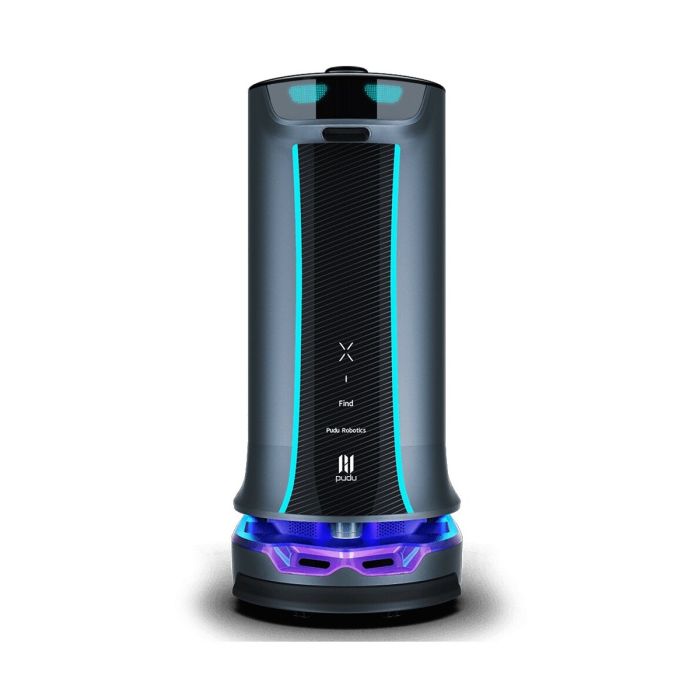
A busy dining room rarely stalls on the way out of the kitchen; it stalls on the way back. Plates stack up on tables, a server vanishes with two armfuls of crockery, and the next course waits until someone is free again. The Pudu Holabot Pager & Notification Delivery Robot (HL101) is PUDU ROBOTICS' answer to that return trip: a four-tray autonomous robot with a 60 kg carrying capacity and a 120 L enclosed, IPX5-rated inner cabin, built to haul what a bus tub cannot and to come when it is called. Pudu applies the same platform beyond restaurants to medical and other fields where heavy, repetitive carrying ties up skilled people.
The HolaBot is available through this product page, by quotation. Send a request with your site details and intended use, and a quote is prepared for the configuration you need, including the separately purchased loading boxes and pagers where they apply.
Background
PUDU ROBOTICS and its delivery lineage
PUDU ROBOTICS is a commercial service robot manufacturer whose name is most often associated with restaurant delivery robots, the open-tray machines that carry dishes from the pass to the table in hospitality venues. That lineage matters, because the HolaBot grew out of a problem the earlier delivery robots exposed rather than solved. Once the food has been served, the dirty plates, glasses and trays still have to make their way back, and that return load is heavier, wetter and less tidy than the outbound one. Pudu positions the HolaBot as the robot for that half of the cycle, while explicitly describing it as an innovative application of autonomous delivery in food, medical and other fields.
Positioning: capacity, enclosure and the call button
Three design decisions define the HolaBot. The first is capacity: 60 kg across four large-capacity trays inside a 120 L compartment, which Pudu frames as giving restaurants a much better turnover. The second is the enclosed, IPX5 waterproof inner cabin, which resists the various liquid splashes of a working environment and keeps the machine body clean, a necessity when the cargo is half-finished soup rather than a plated entrée. The third is how the robot is summoned: a pager function lets staff call and assign tasks at any time, and a "Hola Hola" voice command, picked up by a 6-array omnidirectional microphone, lets the robot locate the sound source in real time and turn around intelligently toward the caller. Together they describe a machine meant to be hailed, loaded and sent on its way, rather than programmed in advance.
Technical Specifications
| Specification | Value |
|---|---|
| Product type | Delivery robot with pager and notification functions, for food, medical and other fields |
| Carrying capacity | 60 kg |
| Compartment volume | 120 L |
| Trays | 4 large-capacity trays, detachable, five adjustable levels |
| Inner cabin protection | IPX5 waterproof |
| Voice recognition | "Hola Hola" command, 6-array omnidirectional microphone |
| Battery capacity | 25.6 Ah (reported) |
| Charging time | 4.5 h (reported) |
| Battery life | 12 h, no load (reported) |
| Cruise speed | 0.5–1.2 m/s (1.64–3.93 ft/s) (reported) |
| Navigation method | Laser and visual integrated SLAM positioning (reported) |
| Overall weight | 55 kg (121.35 lbs) (reported) |
| Overall dimensions | 542 mm × 534 mm × 1228 mm (21.34 × 21.02 × 48.35 in) (reported) |
| Tray size | 390 mm × 360 mm (15.35 × 14.17 in) (reported) |
| Screen | 10.1" LCD display (reported) |
| Operating system | Android (reported) |
| Speaker power | 10 W × 2 stereo speaker (reported) |
| Minimum passing width | 70 cm (27.56 in) (reported) |
| Maximum surmountable height | 7 mm (0.28 in) (reported) |
| Functional modes | Delivery, cruise, direct, collection (reported) |
| Calling methods | Watch calling, pudulink calling, pager calling, NFC calling, beeper calling (reported) |
| Accessories | Loading boxes and pagers purchased separately |
| Not published | Payload per trip beyond tray ratings; maximum climbing angle at full load; Wi-Fi standard; certifications; lidar range — confirmed at quotation |
Specifications as published by the manufacturer; the figures marked reported come from a single source and are confirmed against the datasheet at quotation.
What makes the HolaBot different from an open-tray delivery robot?
The obvious difference is the enclosure, but the reasoning behind it is what matters. An open-tray delivery robot carries presentable items past guests; the HolaBot is designed to carry the unpresentable ones back. Its 120 L compartment hides the load, and its IPX5 inner cabin is rated to shrug off the splashes that come with stacked bowls and drink glasses. The 60 kg carrying capacity is the other half of the argument: the return trip is where weight accumulates, and four large-capacity trays that detach and sit at five adjustable levels let a team configure the holding area for tall jugs on one shelf and flat plates on another. Per the published specification, the robot still moves at 0.5–1.2 m/s through a 70 cm minimum passing width and clears a 7 mm threshold, so it is sized for the same corridors as its lighter siblings while carrying considerably more. The manufacturer has not published a payload per trip beyond the tray ratings, nor a maximum climbing angle at full load; both are confirmed at quotation.
How does the pager and "Hola Hola" calling work on the floor?
A delivery robot that must be dispatched from a tablet at the pass is only useful to the person standing at the pass. The HolaBot's pager function lets any staff member call the robot and assign it a task at any time, which is why Pudu describes it as a pager and notification robot rather than simply a delivery one. Voice adds a second layer: say "Hola Hola" and the 6-array omnidirectional microphone locates the sound source in real time so the robot turns toward whoever spoke. The published specification lists a broader set of calling methods, namely watch calling, pudulink calling, pager calling, NFC calling and beeper calling, together with four functional modes: delivery, cruise, direct and collection. Those reported modes map neatly onto a service shift, with cruise for circulating through a room, direct for a point-to-point run and collection for the clearing sweep. Pagers themselves are purchased separately, so the number and type of calling devices should be specified when requesting a quote.
Who is the Pudu HolaBot for?
The core buyer is a restaurant, hotel dining room, banquet operation or food hall where clearing tables is the task that keeps staff from guests. Operators with large covers, long walks between the dining area and the dish pit, or spill-prone menus gain the most from the 60 kg capacity and sealed cabin. The second segment is healthcare and institutional food service: hospitals, long-term care facilities and campus cafeterias that move meals, linens or supplies along corridors and want a robot that staff can summon with a pager or a word rather than a scheduled route. Pudu names medical settings alongside food service for exactly this reason. A third group is any facility manager running internal logistics in offices or light commercial spaces, provided the reported 70 cm minimum passing width and 7 mm surmountable height suit the building. Buyers who mainly need to present food to guests on open trays, rather than carry heavy or messy loads back, may find one of Pudu's open-tray delivery models a better fit, and the fact sheet for this page covers only the HolaBot itself.
What is the Pudu HolaBot used for?
- Table clearing and bussing — collecting used plates, glasses and trays into the enclosed cabin so servers stay on the floor.
- Food and beverage running — carrying dishes and drinks from the kitchen to a dining area, with the trays set to five adjustable levels for the load.
- On-demand pager dispatch — staff call the robot and assign a task at any time, with pagers specified separately.
- Voice-summoned pickup — the "Hola Hola" command brings the robot to the person who spoke, located by the 6-array microphone.
- Medical and institutional transport — moving meals and supplies along corridors in hospitals and care facilities, as Pudu names medical fields among its applications.
- Wet-load handling — carrying spill-prone cargo thanks to the IPX5 waterproof inner cabin that keeps the body clean.
Pricing and Availability
The HolaBot is quoted on request, and the quotation is the right starting point because the usable configuration depends on accessories that are purchased separately, namely the loading boxes and the pagers. Specifications the manufacturer has not published, including certifications, the Wi-Fi standard, the lidar range and the maximum climbing angle at full load, are confirmed at quotation as well. Delivery, customs clearance and after-sales support are arranged together with the quotation. To begin, use the quotation request available on this page.
Frequently Asked Questions
How much can the HolaBot carry?
Pudu states a 60 kg carrying capacity and a 120 L volume across four large-capacity trays. A payload figure per trip beyond the tray ratings has not been published and is confirmed at quotation.
Is the inner cabin waterproof?
Yes. The inner cabin is rated IPX5, which Pudu describes as effectively resisting the various liquid splashes of a working environment and keeping the machine body clean.
How do staff call the robot?
The robot has a pager function to call and assign tasks at any time, plus "Hola Hola" voice recognition through a 6-array omnidirectional microphone. The published specification also lists watch, pudulink, NFC and beeper calling.
How long does the battery last and how long does it charge?
Per the published specification, battery life is 12 h with no load, on a 25.6 Ah battery with a 4.5 h charging time. These figures are confirmed against the datasheet at quotation.
Will it fit through our corridors and doorways?
The reported minimum passing width is 70 cm (27.56 in), with overall dimensions of 542 mm × 534 mm × 1228 mm and a maximum surmountable height of 7 mm. The maximum climbing angle at full load is not published.
What is included and what is sold separately?
Loading boxes and pagers need to be purchased separately. The detachable trays with five adjustable levels are part of the robot's holding area.
Where can I buy the Pudu HolaBot and what does it cost?
The HolaBot is available through this page by quotation, with no fixed list price shown here. Request a quote with your intended use and accessory needs, and pricing, delivery, customs and support are arranged together.
Summary
The return trip is the part of service that open-tray robots leave to people, and the Pudu Holabot Pager & Notification Delivery Robot (HL101) is built for it: 60 kg of capacity, a 120 L enclosed cabin rated IPX5, four detachable trays at five adjustable levels, and a pager and "Hola Hola" calling system so the robot comes to the mess rather than waiting at the pass. The reported figures for speed, battery, navigation and footprint place it in the same corridors as lighter delivery robots, while the unpublished ones, from certifications to lidar range, are settled at quotation. For a kitchen, ward or facility weighing whether a robot can take over the heaviest walk of the shift, this page is the starting point.